Cash Cropping Explained, From Definition to Farms Worldwide
On this page
- What Is a Cash Crop? (Definition and Meaning)
- Cash Crop Farming vs Subsistence Farming
- Types of Cash Crops, With Real Examples
- 01. Grain and cereal cash crops
- 02. Fiber cash crops
- 03. Beverage and stimulant cash crops
- 04. Sugar and oil cash crops
- 05. Horticultural and specialty cash crops
- Cash Crops Around the World
- What Makes Cash Crop Farming Different From Country to Country
- 01. Climate and rainfall reliability
- 02. Land size and how easy it is to mechanize
- 03. Labor cost and availability
- 04. Government policy, subsidies, and trade rules
- 05. Infrastructure, ports, and market access
- 06. Global commodity prices and currency swings
- Why Cash Cropping Matters
- Growing Cash Crops Without Wearing Out the Land
- How Satellite Data Helps Cash Crop Farmers, Agronomists, and Governments
- Frequently asked questions
- Sources and further reading
A practical guide to cash crops — what a cash crop actually is, how cash crop farming differs from growing food for your own table, real cash crop examples from farms around the world, and why the very same crop can be a moneymaker in one country and barely worth planting in another.
Quick answer
A cash crop is any crop a farmer grows mainly to sell for money, not to eat at home or feed to livestock. Cotton, coffee, tea, rubber, sugarcane, cocoa, tobacco, and cut flowers are classic examples, and staple foods such as wheat, rice, corn, and soybeans count too, whenever they're grown for the market instead of the farmer's own kitchen. This practice, called cash cropping or cash crop farming, is what moves most of the world's food and farm income from the field to the buyer, and it's a different crop in almost every country, shaped by that country's climate, land, labor, and policy.
What Is a Cash Crop? (Definition and Meaning)
The definition of cash crops comes down to one simple test, and it has nothing to do with the plant itself. A crop counts as a cash crop when it's grown mainly to be sold, and it counts as a subsistence crop when it's grown mainly to be eaten by the farmer's own household or fed to their animals. Rice grown in Thailand for export is a cash crop. The same rice, grown by a family in a nearby village for their own meals, is a subsistence crop. Same plant, same field type, completely different purpose.
That's the real cash crop meaning, and it's why the term shows up in agriculture, economics, and history all at once. A cash crop farmer is running a small business, even on a one-acre plot. The harvest has to reach a buyer, a market, a mill, or an export terminal, and the price the farmer gets depends on decisions made far outside their own fence line, like global supply, currency swings, and shipping costs. Growing crops for cash also means taking on cash-style risk. A bad season doesn't just mean a hungrier winter, it means lost income, the same way it would for any other business.
Cash cropping isn't new. Farmers have grown surplus crops to sell for as long as there have been markets to sell them in, and for a long time that meant staying close to water, since a farm without easy river or coastal access had no practical way to get a harvest to a buyer. That changed once transportation improved and machines like the cotton gin made processing a crop like cotton fast enough to keep up with demand, which is what let cash crop farming spread inland and eventually reshape agriculture into something close to what it is today. What's changed since then isn't the basic idea, it's the scale, the number of countries involved, and how tightly cash crop farming is now woven into national economies, trade deals, and, increasingly, satellite-based monitoring of the fields themselves.
Cash Crop Farming vs Subsistence Farming
Cash crop farming and subsistence farming sit at opposite ends of the same question, who is the harvest for. A deeper look at how subsistence farming works on the smallest, most labor-intensive plots is covered in our guide to intensive subsistence farming, but the short version is useful here too.
| Factor | Cash crop farming | Subsistence farming |
|---|---|---|
| Main goal | Sell the harvest for income | Feed the farmer's own household |
| Typical buyer | Local market, mill, exporter, or trading company | No buyer, the family or its livestock consumes it |
| Scale | Ranges from a smallholder's few rows to thousand-acre operations | Usually small, often under 2 hectares |
| Main risk | Falling market prices, export rules, currency swings | A poor harvest directly threatens food supply |
| Example | A cotton farmer in Texas selling into the global textile market | A rice-and-vegetable plot grown for one family's meals |
Most working farms actually blend the two rather than picking one side completely. A household might grow enough maize or rice to feed itself for the year, then plant a cash crop like cotton, coffee, or vegetables in the same season, on the same land, purely to raise money for school fees, tools, or farm debt. That mixed approach is common across smallholder agriculture worldwide, and it's also where multiple cropping, growing more than one crop on the same plot in a year, does double duty, stretching a small piece of land to cover both food and income needs at once.
Types of Cash Crops, With Real Examples
Cash crops fall into a handful of broad groups, and knowing which group a crop belongs to explains a lot about how, and where, it gets grown.
01. Grain and cereal cash crops
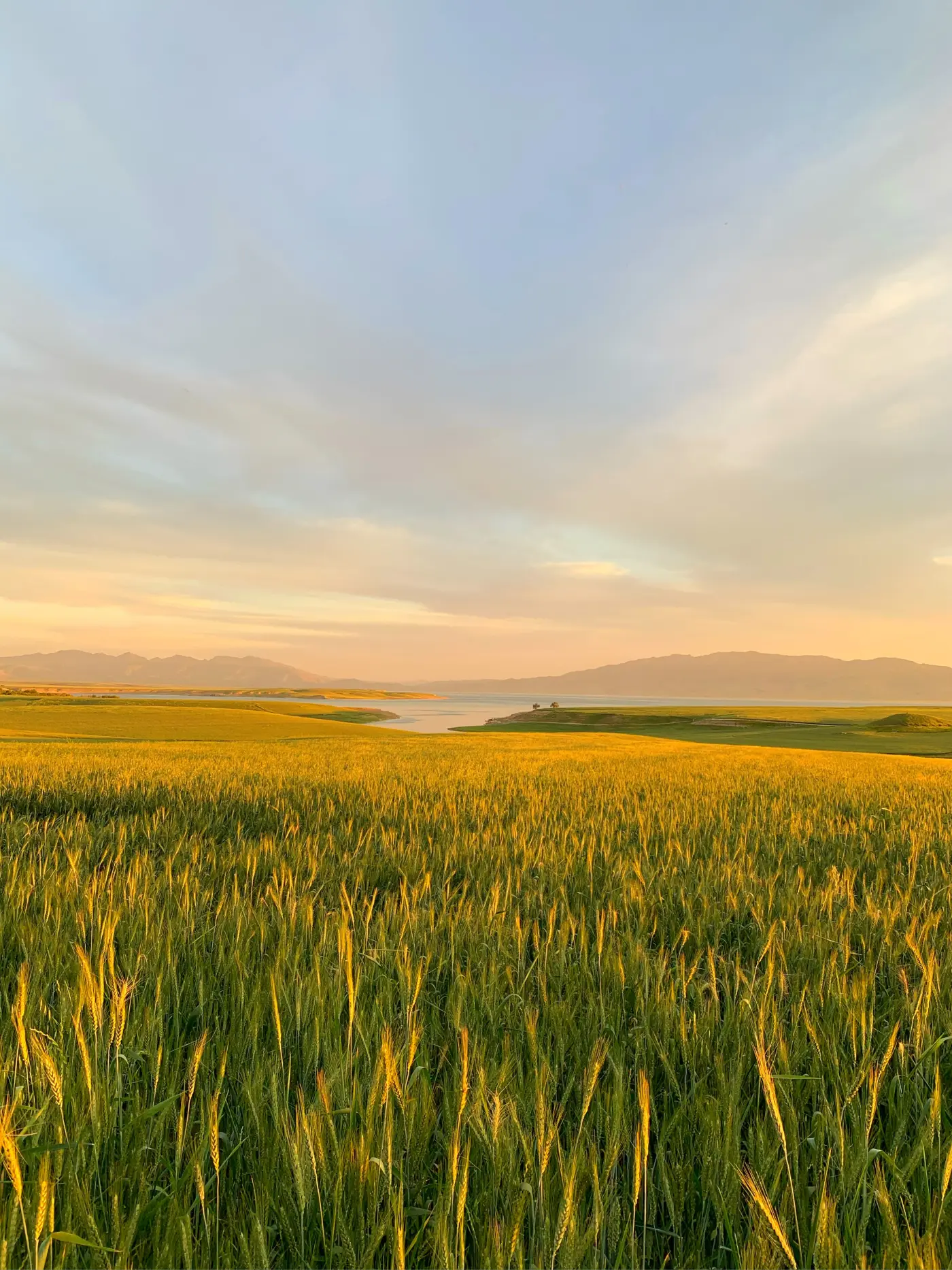
Wheat, corn, rice, and soybeans are grown on more land, in more countries, than any other cash crop category, mainly because they're also staple foods. When a farmer in Iowa or a cooperative in Punjab grows these crops for sale rather than the household table, the exact same plant that feeds a subsistence farmer elsewhere becomes one of the biggest cash crops in world agriculture.
02. Fiber cash crops
Cotton is the dominant crop in this group, grown across warm, sunny regions from Texas to India to West Africa purely for the fiber it produces, not for food. Its reach goes well past clothing too, the same fiber turns up in medical bandages and gauze, currency paper, and home textiles, which is part of why it stays one of the most consistently traded cash crops on Earth. Jute and flax fill a smaller but still important role, especially in South Asia, where jute is woven into sacking, rope, and increasingly, biodegradable packaging as an alternative to plastic.
03. Beverage and stimulant cash crops
Coffee, tea, cocoa, and tobacco are grown almost exclusively as cash crops, since none of them are dietary staples on their own. They also tend to reward a specific climate so precisely that entire regions, and sometimes entire national economies, organize around one crop, coffee in the Ethiopian and Brazilian highlands, tea across Sri Lanka's hill country, cocoa in West Africa's humid lowlands.
04. Sugar and oil cash crops

Sugarcane, sugar beet, palm oil, soybean oil, and rapeseed feed the world's sugar and vegetable-oil supply, and nearly all of it is grown for sale rather than home use. These crops tend to concentrate wherever land is flat, cheap, and available in large blocks, since processing sugar or oil profitably usually requires an industrial mill nearby and a large, steady supply of raw crop to keep it running. Florida shows how concentrated that can get, its nutrient-rich muck soil, locally nicknamed black gold, produces more than half of all US sugarcane, worth about $515 million a year in that state alone.
05. Horticultural and specialty cash crops
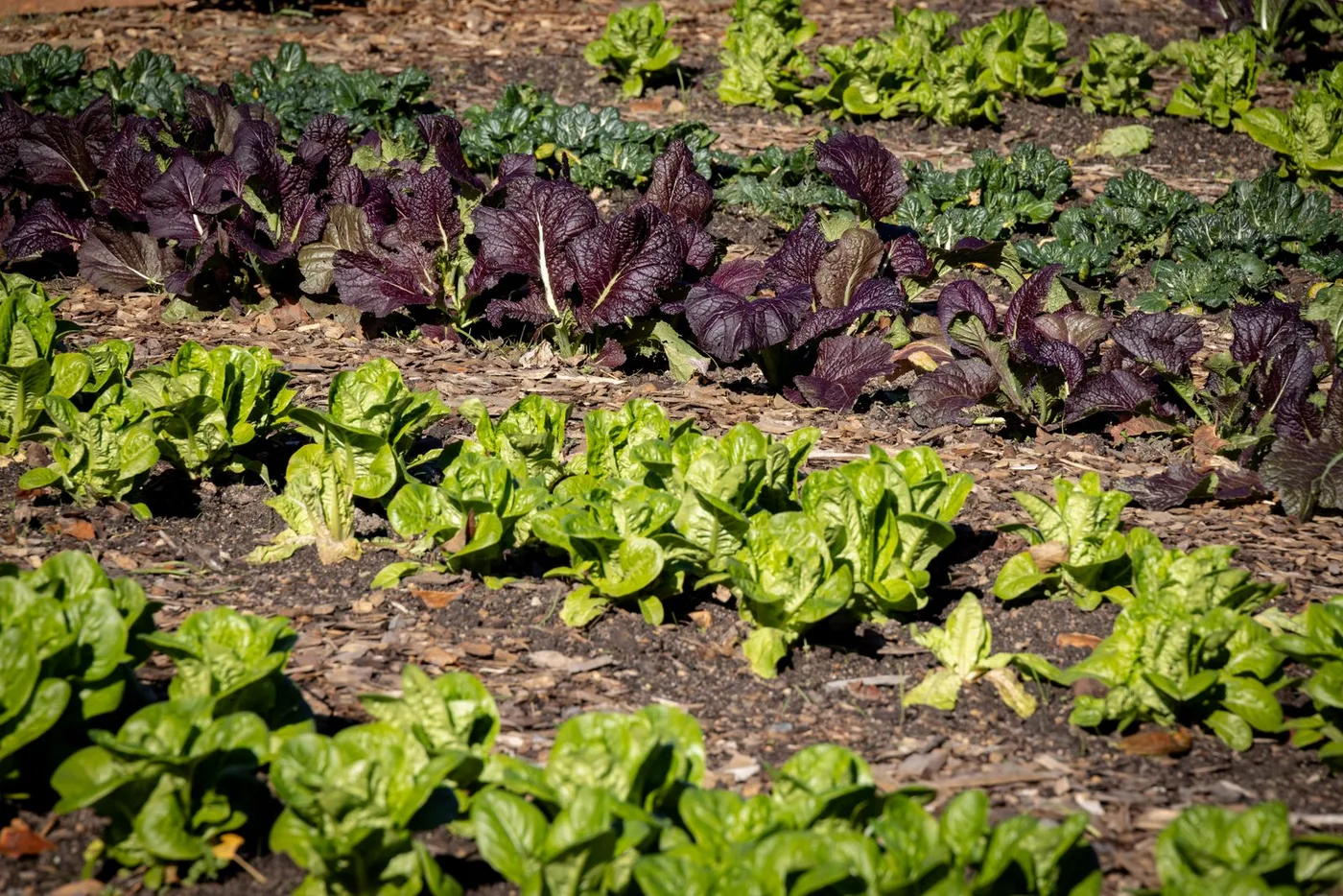
Avocados, bananas, cut flowers, spices, and vegetables round out the list, and they're often the most profitable cash crop option per acre, even though they take up far less total farmland than grain or oilseed crops. A quarter-acre of lavender can bring in close to $18,000 a year sold in bunches, according to Penn State Extension, and a quarter-acre of saffron, which needs roughly 50,000 hand-picked flowers to fill a single pound, can sell for $5,000 to $10,000 a pound. Even forest-grown ginseng, harvested from the shade of eastern US woodlands, commonly sells for $200 to $600 a pound. Returns like that, on land measured in fractions of an acre, are exactly why smallholders looking to diversify often start here.
Cash crops can also be grouped by timing instead of type. Seasonal cash crops, like vegetables, cotton, or most oilseeds, get replanted every year, so their price can swing hard from one harvest to the next. Perennial cash crops, like tea, coffee, rubber, and fruit trees, are planted once and then harvested for years or decades, trading a slower start for steadier income once the plants mature. Most countries with a serious cash crop economy lean on a mix of both, so a bad season for one doesn't sink the whole farm.
Cash Crops Around the World
Ask what the leading cash crop is and the honest answer is, it depends entirely on which country you're standing in. Agriculture cash crops vary by climate, soil, land size, and what the rest of the world happens to be buying that year, which is exactly why the same handful of countries keep showing up at the top of very different crop lists.
| Country / region | Leading cash crops | Recent scale |
|---|---|---|
| United States | Corn, soybeans, cotton | Corn and soybeans alone brought in about $106 billion in cash receipts in 2025 (USDA ERS) |
| Brazil | Soybeans, sugarcane, coffee | A record 79 million metric tons of soybeans shipped to China in the first ten months of 2025 |
| Argentina | Soybeans, maize, wheat | 7.6 million metric tons of soybeans exported in nine months of 2025, 90% of it bound for China |
| Mexico | Avocados, coffee, agave | Avocado exports alone are on pace to reach about $4 billion in 2025 |
| China | Cotton, tobacco, tea | Tobacco leaf growing revenue alone is forecast near $11.4 billion in 2025 |
| India | Cotton, sugarcane, spices | The world's largest cotton grower, over 33 million metric tons in the 2023-24 season |
| Thailand | Rice, rubber, cassava | Rubber export earnings grew 37% in 2024, the fastest of any major Thai farm export |
| Sri Lanka | Tea, rubber, cinnamon | Tea exports alone are projected to earn about $1.5 billion in 2025 |
| Malaysia | Palm oil, rubber | Grows roughly a quarter of the entire world's palm oil supply on its own |
| Indonesia | Palm oil, rubber, coffee | Alongside Malaysia, supplies the large majority of the world's palm oil |
| Philippines | Bananas, coconut, sugarcane | Banana exports jumped 25.6% in 2025, making it the world's second-largest banana exporter |
| Kenya | Tea, coffee, cut flowers | One of the world's top tea exporters and a leading supplier of cut flowers to Europe |
| European Union | Sugar beet, rapeseed | EU sugar beet production is projected near 15.4 million metric tons for the 2024-25 season, led by France, Germany, and Poland |
Notice what doesn't change from row to row, nearly every country on this list built its cash crop lineup around whatever its climate, land, and labor force already do best, then scaled it up once a reliable buyer showed up. That pattern is worth pulling apart on its own, because it explains the differences far better than any single country's story can.
What Makes Cash Crop Farming Different From Country to Country
The same crop can be a national success story in one country and a poor bet in another. Six factors explain most of that gap.
01. Climate and rainfall reliability
Crops that depend on rain rather than irrigation, cotton, coffee, and cocoa among them, are only as reliable as the weather where they're planted. A country with a dependable rainy season or year-round warmth, like much of Southeast Asia or the Brazilian Cerrado, can grow water-hungry cash crops that would fail somewhere drier or colder without heavy irrigation investment.
02. Land size and how easy it is to mechanize
Flat, wide-open land lets a farmer run large machinery and cover more ground per worker, which is exactly why the US Midwest, Argentina's Pampas, and Brazil's Cerrado all lean toward big, mechanized grain and oilseed operations. Steep or fragmented land, common across hill regions of Sri Lanka, Southeast Asia, and East Africa, makes machinery far harder to use, so labor-intensive crops like tea and coffee, picked by hand anyway, fit the terrain better.
03. Labor cost and availability
Where farm wages are rising, farmers substitute machinery for workers wherever they can afford to. Where labor stays affordable and available, hand-harvested crops like tea, cotton, and coffee, which still resist full automation, keep their edge over crops that need less human attention but more equipment.
04. Government policy, subsidies, and trade rules
Price supports and subsidy programs push farmers toward specific crops, sometimes deliberately. Rice subsidies across much of Asia have long nudged farmers toward growing rice instead of diversifying, while China's land reforms in the 1980s did the opposite, giving smallholders room to plant cash crops for the first time in a generation. A country's trade agreements matter just as much, since a tariff or an export ban abroad can make a crop unprofitable overnight, with nothing changed on the farm itself.
05. Infrastructure, ports, and market access
A harvest is only valuable once it reaches a buyer, so roads, storage, and nearby ports matter as much as what's growing in the field. Landlocked or poorly connected regions tend to favor durable, storable crops like grain and cotton over perishable ones like fresh fruit or cut flowers, which need to move fast or spoil.
06. Global commodity prices and currency swings
A cash crop farmer doesn't set their own price, the world market does. A currency that weakens against the US dollar can suddenly make a country's exports cheaper and more attractive abroad, while a price crash in a crop like coffee or cotton can wipe out a season's profit even when the harvest itself was excellent. That single fact, more than soil or weather, is why cash cropping carries real financial risk that subsistence farming simply doesn't.
Why Cash Cropping Matters
Cash cropping does more than put money in one farmer's pocket. Because the income gets spent, saved, taxed, and re-invested, a strong cash crop harvest tends to ripple outward through the whole local economy, supporting jobs in transport, processing, and trade that have nothing to do with actually growing the crop.
The ripple effect, in numbers
How far cash crop income actually travels through an economy.
Total US agricultural export value in 2025, built heavily on cash crops like corn, soybeans, and cotton.
Share of Benin's export earnings that comes from cotton alone, about 13% of the country's entire GDP.
Share of Senegal's total population whose livelihood depends on groundnut farming, a crop grown mainly for the market.
Value of the farm products Africa exported to the rest of the world in 2017 (IFPRI).
Average annual growth of Uganda's cash crop sub-sector in recent years, among the fastest-expanding in East Africa, after policy reforms opened the door to commercial production.
That pattern repeats at every scale, from a single village to an entire nation. A farmer who earns cash from a crop tends to spend part of it locally, at the hardware store, the school, the clinic, which is how a good cash crop season turns into new jobs and new business well beyond the farm gate. It's also why so many governments treat cash crop policy as economic policy, not just agricultural policy. Beyond that ripple effect, cash cropping is a direct food security tool in much of the developing world, since the income from a cash crop harvest is what buys food a household can't grow itself, especially in the lean months between its own subsistence harvests.
See any farm's growing season from above
Search live optical, multispectral, and SAR imagery or task new coverage over a single field or an entire growing region, tracking crop health, soil moisture, and field boundaries from planting through harvest.
Growing Cash Crops Without Wearing Out the Land
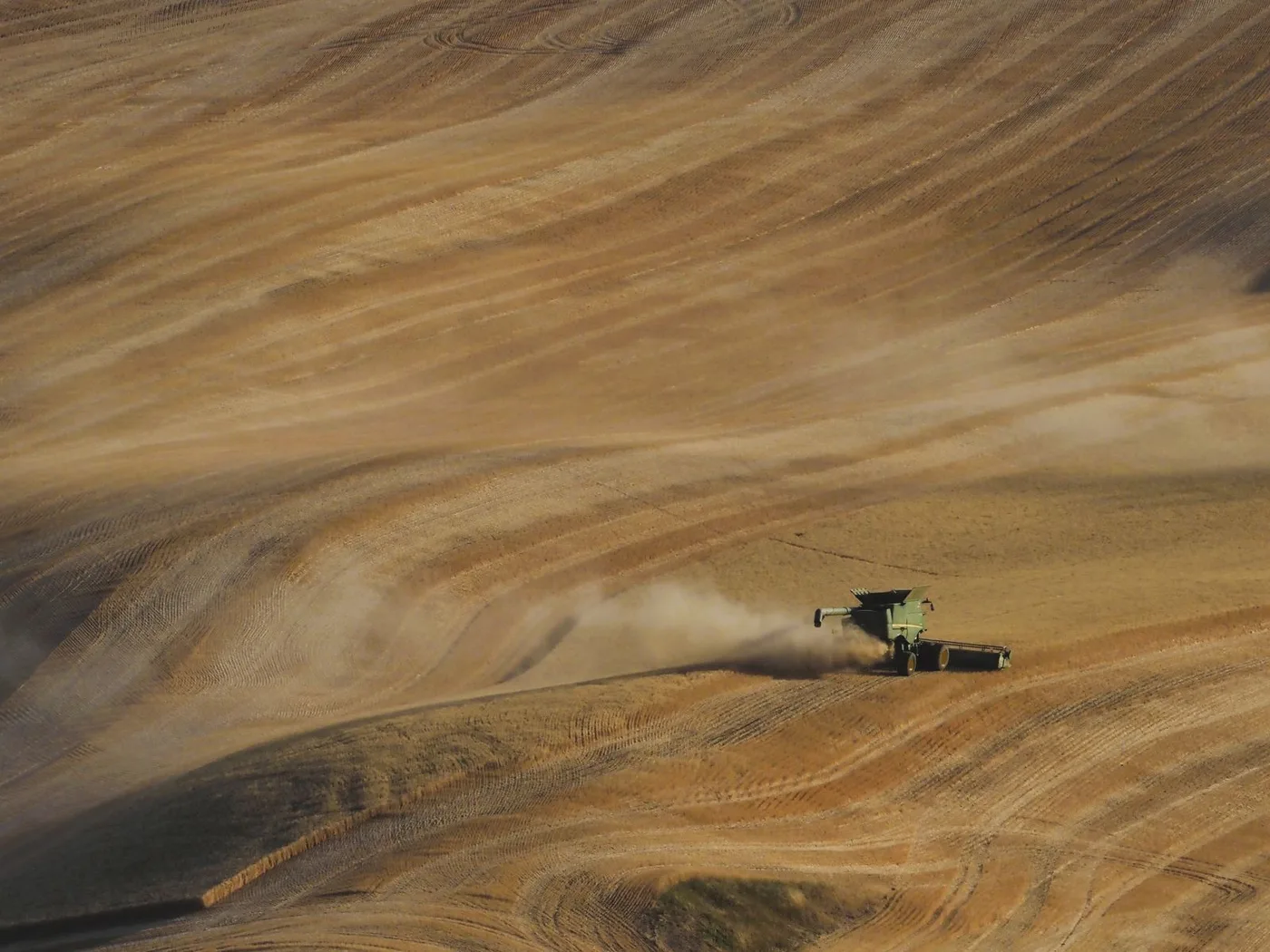
Planting the same cash crop on the same field, year after year, known as monocropping, slowly drains the specific nutrients that crop needs most, and heavy fertilizer or pesticide use without a break can add to soil and water pollution over time. None of that is a reason to avoid cash crops, it's the reason crop rotation exists. Alternating a cash crop with a different plant family, or interplanting it with a nitrogen-fixing cover crop, lets the soil recover between cash crop seasons instead of being pushed to its limit every single year.
Agroforestry, growing a cash crop like coffee or cocoa in the shade of taller trees instead of on cleared, open land, is one of the clearest examples of farming for cash without stripping an ecosystem bare. Certified and organic cash crop programs push in the same direction, rewarding farmers for using fewer chemical inputs and keeping buffer zones around forests, wetlands, and waterways intact. A growing number of these programs now build in a zero-deforestation rule too, since clearing new land for cash crop fields, rather than working existing fields harder, is one of the biggest single drivers of habitat loss worldwide, agriculture is linked to roughly 86% of the species currently at risk of extinction, according to a UNEP-backed global assessment. Keeping cropland productive through rotation and shorter fallow gaps, instead of clearing fresh land every time yields dip, is a big part of how that pressure gets managed. Farmer cooperatives and extension networks add a third layer, spreading know-how about which rotation, which cover crop, and which input schedule actually works on a given soil type, so an individual smallholder doesn't have to learn it the hard way, alone.
Diversifying which cash crops a farm grows also builds resilience against a season with no rain at all, not just against soil that's wearing thin. Farming programs in drought-prone regions increasingly pair a staple food crop with a hardier, less water-hungry cash crop, so a bad year for one doesn't wipe out a household's income and its food supply at the same time. These programs also tend to open cash cropping up to more of the household, women in particular often gain their first real path to an independent income once a farm adds a cash crop like vegetables or cut flowers alongside its staple fields, work that's historically been undercounted even though it keeps the farm running.
How Satellite Data Helps Cash Crop Farmers, Agronomists, and Governments
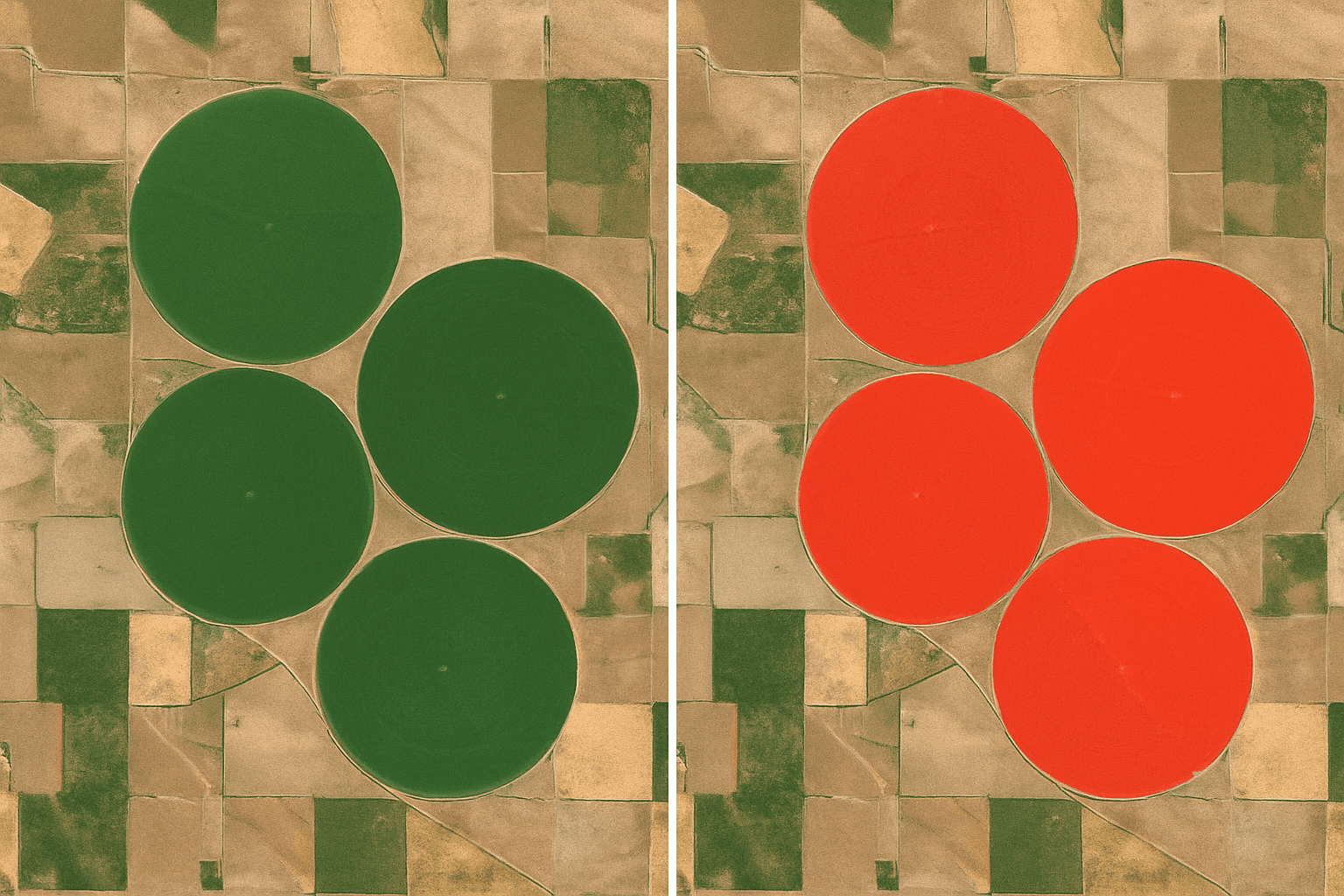
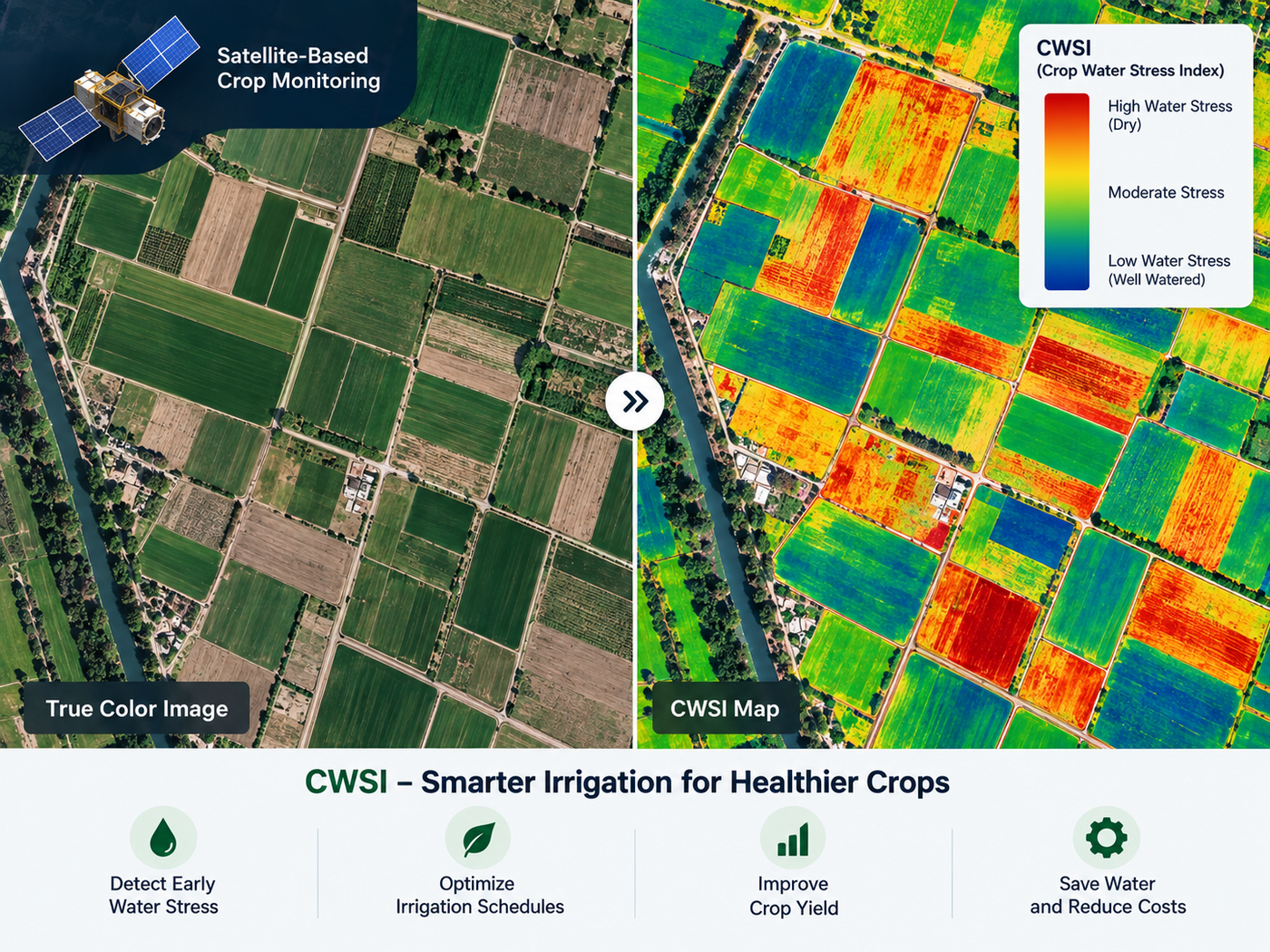
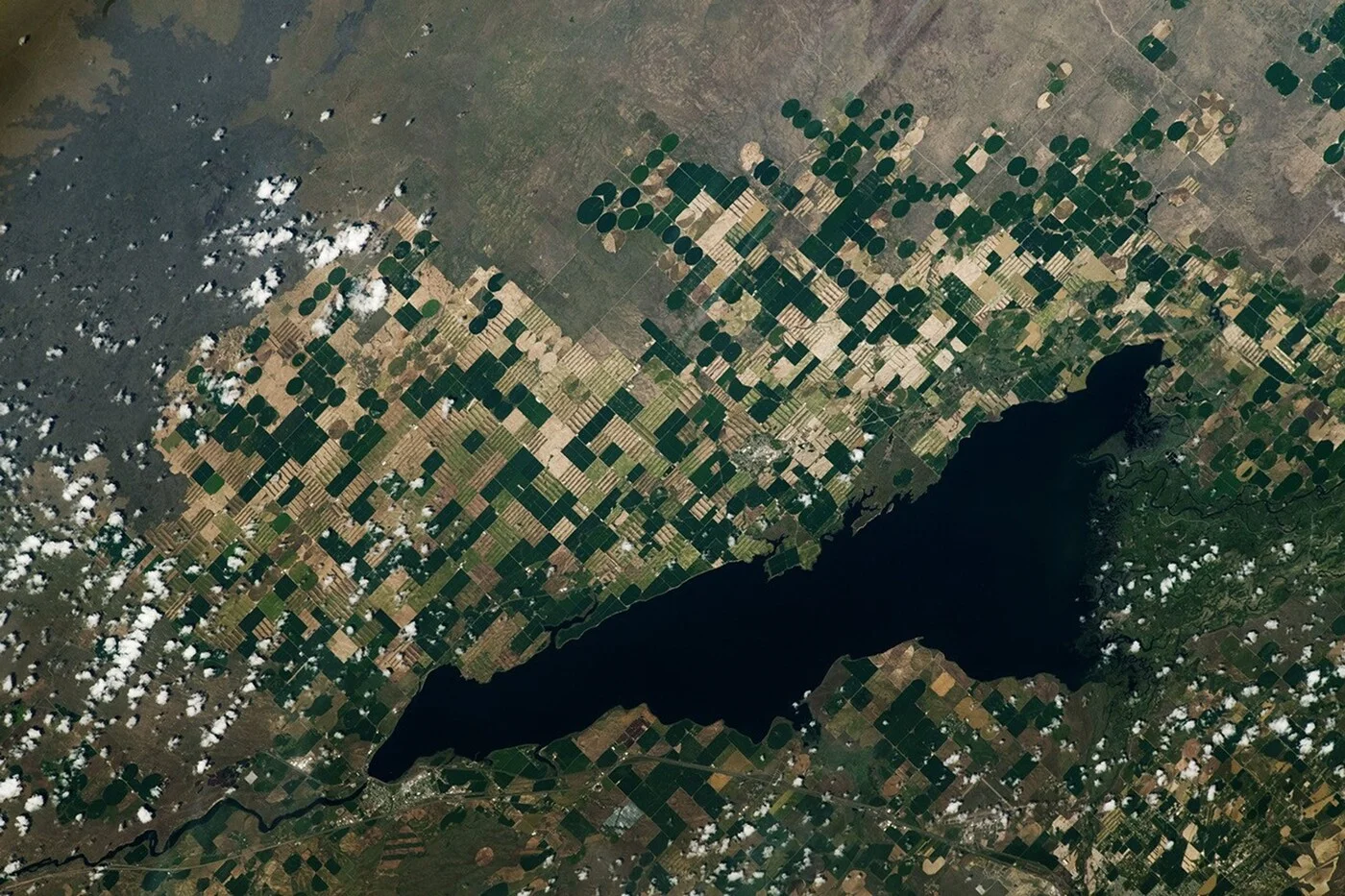
Cash crops grown for export usually have a buyer, a bank, or a government agency somewhere down the line asking for proof, of the acreage planted, the crop's health, and the likely yield, often before harvest is even finished. Satellite imagery answers exactly that kind of question at scale, tracking vegetation health, soil moisture, and field boundaries across a whole growing season without a single person having to walk every acre, the same satellite-based agriculture monitoring used across precision farming programs worldwide.
That capability used to be reserved for large commercial operations, but it's spreading fast. Over 70% of large crop farms worldwide are expected to be using satellite-based precision farming by 2026, and pairing multispectral imagery with AI-driven analysis is projected to cut input costs by up to 25% in regions that adopt it. Agronomists use the same imagery to diagnose crop stress early, governments use it to verify crop insurance claims and price crop risk and estimate national yields before the official harvest count comes in, and cash crop cooperatives increasingly share a single satellite subscription across dozens of smallholder members, spreading a cost none of them could justify alone.
Key takeaways
- A cash crop is any crop grown mainly to be sold rather than eaten by the farmer who grew it, the purpose defines the crop, not the plant itself.
- Common cash crop examples include cotton, coffee, tea, sugarcane, cocoa, tobacco, rubber, and cut flowers, along with staple crops like wheat, corn, soybeans, and rice whenever they're grown for the market.
- Cash crops fall into five broad groups, grain and cereal, fiber, beverage and stimulant, sugar and oil, and horticultural or specialty crops.
- The same crop can succeed as a cash crop in one country and barely register in another, driven by climate, land size, labor cost, government policy, infrastructure, and global commodity prices.
- Cash cropping supports far more than the farmer who grows it, cotton alone accounts for roughly 80% of Benin's export earnings, and groundnut farming supports an estimated 40% of Senegal's entire population.
- Crop rotation, agroforestry, and cooperative knowledge-sharing let farmers keep growing cash crops for years without wearing out the soil that makes the next harvest possible.
Frequently asked questions
What is cash cropping?
Cash cropping is the practice of growing a crop mainly to sell it for money, rather than to eat it or feed it to farm animals. A farmer who plants corn or coffee and sells the harvest at market is cash cropping, even if the same crop could just as easily be grown for the family table somewhere else.
What is a cash crop?
A cash crop is any crop grown mainly to be sold for profit instead of consumed by the farmer who grew it. Cotton, coffee, tea, sugarcane, rubber, and cocoa are classic examples, and staple foods like wheat, rice, corn, and soybeans count too whenever they're grown for the market rather than the household.
What is the definition of cash crops?
The definition of cash crops comes down to purpose, not the plant itself. If a crop is grown to be sold, it's a cash crop, and if it's grown to be eaten by the farmer's own family or livestock, it's a subsistence crop. The same crop, like rice, can be either one depending on where it ends up.
What are some cash crop examples?
Common cash crop examples include cotton, coffee, tea, cocoa, sugarcane, tobacco, rubber, and cut flowers, along with staple crops like wheat, corn, soybeans, and rice when they're grown for sale. High-value specialty crops such as avocados, saffron, and lavender are also grown as cash crops in the right climate.
What is the difference between cash crops and subsistence crops?
Cash crops are grown to be sold for money, while subsistence crops are grown to feed the farmer's own household with little or no surplus for sale. The difference is about intent, not the crop itself, and many farms actually grow some of each.
Why are cash crops different from country to country?
Climate, land size, labor cost, government policy, and access to roads and ports all shape which cash crops make sense in a given country. A crop that thrives on rainfall and available hand labor in one country, like tea in Sri Lanka, may not be practical at all somewhere with different weather or higher wages.
What is the most profitable cash crop?
Profitability depends on the crop, the land, and the local market, but high-value specialty crops like saffron, lavender, and avocados can earn far more per acre than staple grain crops, while large-scale crops like soybeans and corn earn less per acre but at a far bigger scale. Mexico's avocado exports alone are on pace to reach about $4 billion in 2025.
Are wheat, rice, and corn considered cash crops?
Yes, whenever they're grown to be sold rather than eaten by the farmer's own household. The same crop can be a subsistence crop on one farm and a cash crop on the farm next door, depending on whether the harvest goes to market or stays home.
How does satellite imagery help cash crop farmers?
Satellite imagery lets farmers, agronomists, and government agencies track crop health, soil moisture, and field boundaries across an entire growing season without walking every acre. It's especially useful for cash crops grown for export, where buyers and lenders often want proof of yield and condition before the harvest is even in.
What are the top cash crops grown in the United States?
Corn, soybeans, and cotton are the leading cash crops in the United States by value, together accounting for well over $100 billion in cash receipts in 2025. Most of that harvest is sold into national and global markets rather than consumed on the farm that grew it.
Sources and further reading
- USDA Economic Research Service, US cash receipts for corn, soybeans, and cotton, 2025
- USDA Foreign Agricultural Service, Brazil and Argentina soybean export data, 2025
- USDA Foreign Agricultural Service, Mexico avocado annual report, 2025
- USDA Foreign Agricultural Service, China cotton and tobacco reports, 2025
- Statista, Thailand leading agricultural product exports, 2024-2025
- Sri Lanka Tea Research Institute and EconomyNext, tea and rubber export earnings, 2024-2025
- Malaysian Palm Oil Board, palm oil export statistics, 2025
- Philippine Statistics Authority and Department of Agriculture, banana and coconut export data, 2025
- Eurostat, EU sugar beet and rapeseed production data, 2024-2025
- International Food Policy Research Institute (IFPRI), Africa agriculture trade monitor
- BIODEV2030, cash crop farming and biodiversity, Benin, Senegal, and Uganda case data
- UNEP, food systems and biodiversity loss assessment
- Penn State Extension, lavender and specialty cash crop production data
- USDA Farm Service and university extension pricing data, ginseng and saffron
- University of Florida IFAS Extension, Florida sugarcane production data
- NASA Earth Observatory, farmland and irrigation imagery
Track cash crop fields from planting to harvest
Search our live optical, multispectral, and SAR archive or task new imagery over your cash crop fields, whether that's a single smallholding or a full export program, to monitor crop health, soil moisture, and yield potential season to season.