Intensive Subsistence Farming: Definition, Types, and Practices
On this page
- What is subsistence agriculture?
- What is intensive subsistence farming? (Definition)
- Types of subsistence farming: primitive vs. intensive
- Where is intensive subsistence farming practiced?
- How this compares to US and EU farm scale
- Characteristics of intensive subsistence agriculture
- 01. Very small, fragmented landholdings
- 02. Farming is intensive in both time and space
- 03. Heavy reliance on hand labor
- 04. Heavy reliance on animal and plant manures, with rising chemical input use
- 05. Dominance of paddy rice and other staple food crops
- 06. Limited access to credit and financial services
- Intensive cultivation techniques that define the system
- Subsistence farming vs. intensive, extensive, and commercial farming
- How satellite imagery and precision agriculture are reaching subsistence farmers
- Frequently asked questions
- Sources and further reading
Intensive subsistence farming is what happens when a family has too little land and too many mouths to feed from it, so every square meter gets worked as hard as possible. It's still how a large share of the world's rural population grows its food, and it's the reason terraced hillsides across monsoon Asia are cropped edge to edge rather than left as pasture. This guide covers what intensive subsistence farming actually is, how it differs from primitive subsistence farming, extensive farming, and commercial agriculture, the intensive cultivation techniques that define it, where it's practiced today, and how satellite-based precision agriculture is starting to reach even the smallest of these farms.
Quick answer
Intensive subsistence farming is a form of subsistence agriculture in which farmers work small, often fragmented plots of land, typically under 2 hectares, as intensively as possible, through terracing, multiple cropping, and heavy hand labor, to grow enough food for their own family with little or no surplus for sale. It's most common across monsoon Asia (China, India, Bangladesh, Vietnam, Indonesia, the Philippines), where high rainfall, warm temperatures, and dense rural populations make wet rice cultivation on tiny landholdings the dominant farming system.
What is subsistence agriculture?
Subsistence agriculture is farming done to feed the farmer's own household rather than to sell into a market. Whatever is grown, grain, vegetables, or livestock, is consumed directly by the family that produced it, with little or no surplus left over to trade. It's widely considered the first form of agriculture: when early humans stopped foraging and started growing food deliberately, everything they grew was for themselves, which is also what led scattered groups to settle in one place rather than continue moving with the seasons.
Subsistence agriculture still supports a meaningful share of the world's population today, concentrated in developing regions of Asia, Africa, and Latin America. According to FAO analysis, roughly five out of every six farms worldwide are smaller than 2 hectares; together they work only about 12% of the world's agricultural land but produce close to 35% of the world's food, and nearly 60% of food in low- and lower-middle-income countries specifically.
What is intensive subsistence farming? (Definition)
Intensive subsistence farming adds one qualifier to that general definition: intensive. It's what subsistence agriculture becomes once a household's plot is too small to feed itself through ordinary methods and expanding the land simply isn't an option. Instead of farming more area, the household farms the same small area harder, through heavy manual labor, multiple cropping, terracing, and constant use of every part of the plot, substituting labor for the capital, land, and machinery it doesn't have.
The root cause is usually inheritance. As farmland passes from parent to children, it's split into progressively smaller plots with each generation, and once a plot drops below the size that can feed a household by ordinary means, intensifying is often the only option left: plant multiple crops a year instead of one, terrace hillsides that would otherwise sit unused, and drain swamps or irrigate dry patches to bring marginal land into production.
Note on terminology: some searches use "substantial farming" when they mean subsistence farming. The two are effectively opposites: subsistence farming produces just enough for a family's own needs, while "substantial" implies large-scale output, which describes commercial farming instead.
Types of subsistence farming: primitive vs. intensive
Subsistence farming splits into two broad types, distinguished mainly by how much pressure the farmer is under to intensify.
| Factor | Primitive subsistence farming | Intensive subsistence farming |
|---|---|---|
| Method | Shifting cultivation ("slash and burn"): clear land, farm it a few years, move on | Continuous cultivation of the same small plot, year after year |
| Land use | Land is abandoned once fertility drops, allowed to regenerate naturally | Land is never left idle; a new crop replaces the last as soon as it's harvested |
| Landholding size | Variable, often larger but used briefly | Very small and fixed, commonly 0.25 to 10 acres (roughly 0.1 to 4 hectares) |
| Labor intensity | Lower, land does more of the work through fallow recovery | Very high, labor substitutes for the land and capital the farmer lacks |
| Modern form | Largely reduced due to environmental impact; survives as homestead/kitchen-garden farming | Widespread and expanding wherever landholdings keep fragmenting |
Shifting cultivation itself is classified as extensive, not intensive, since it uses a large land area with comparatively low input per plot; it just happens to fall under the "subsistence" half of the equation because nothing is grown for sale. Two other extensive subsistence patterns show the same land-for-labor tradeoff: pastoral or semi-nomadic grazing, where livestock are moved across large rangeland areas to follow seasonal forage instead of being fed on a fixed plot, and bush-fallow mixed farming, which cultivates a larger area than an intensive system would at lower labor input per hectare, accepting a lower yield density in exchange for not needing irrigation or purchased inputs. Where shifting cultivation has declined instead of shifting to one of those, it often persists in a gentler form: homestead farming, in which a family works a small kitchen garden using its own bio-waste and manure as fertilizer.
Where is intensive subsistence farming practiced?
Two conditions have to line up for intensive subsistence farming to make sense: enough sunlight to support year-round or near-year-round growing, and enough rainfall, usually from a reliable monsoon, to support water-hungry staples like wet rice without full irrigation infrastructure. Where both hold, and population density is high enough to have fragmented landholdings down to a fraction of a hectare, intensive subsistence farming tends to dominate.
| Region | Typical average landholding | Dominant crop |
|---|---|---|
| China | About 0.6 hectares nationally | Rice in the south, wheat and soybeans in the north |
| India | About 1.08 hectares; over 80% of holdings are under 2 hectares | Rice, wheat, and pulses, varying by state |
| Bangladesh, Vietnam, Indonesia, the Philippines | Typically under 1 hectare | Wet (paddy) rice, often two or three harvests a year |
| Japan, South Korea | Small, increasingly mechanized landholdings | Rice, with rising use of hired machinery where affordable |
| Parts of Europe and North America | Small countryside households, scattered rather than regionally concentrated | Mixed vegetables and staples for household use |
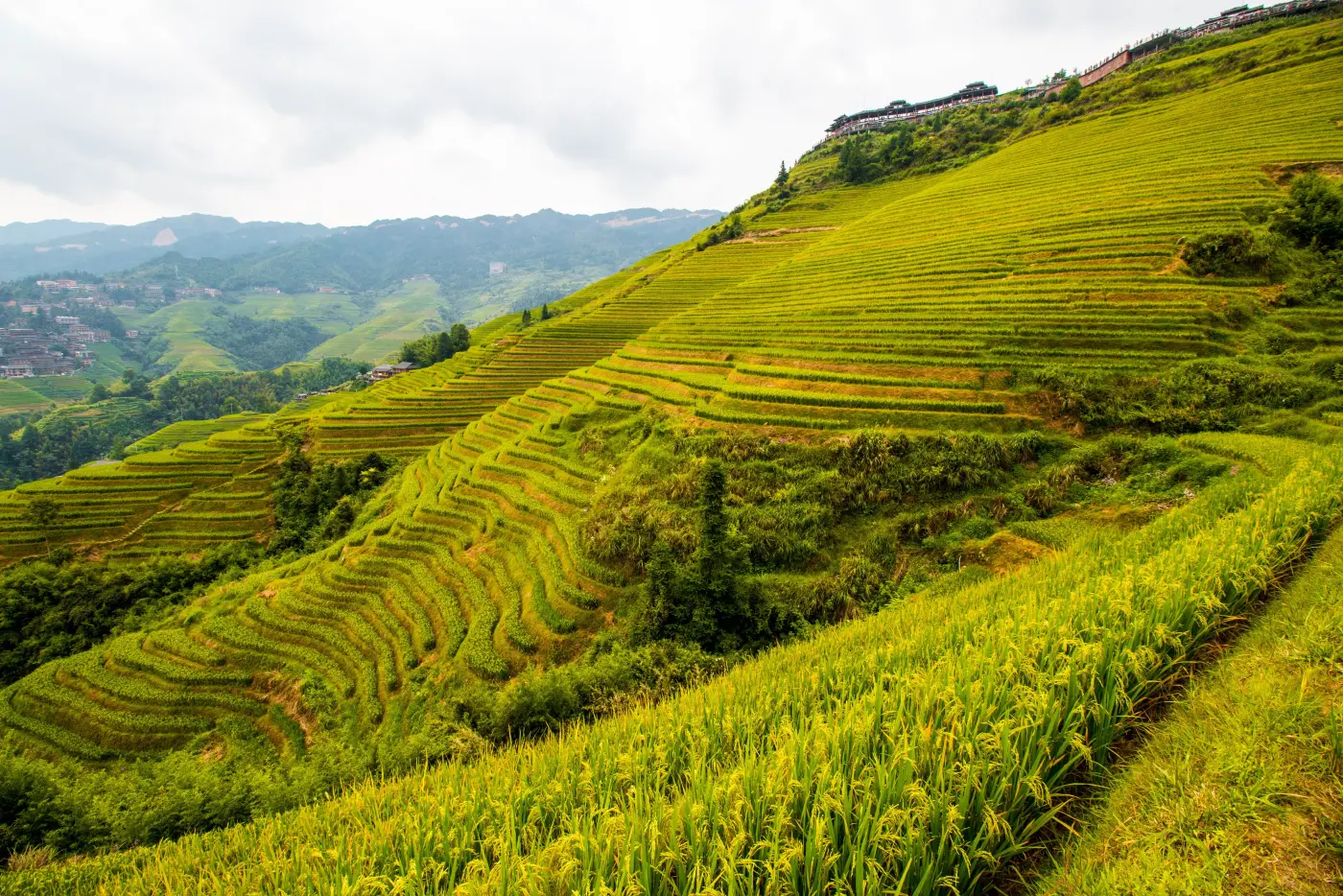
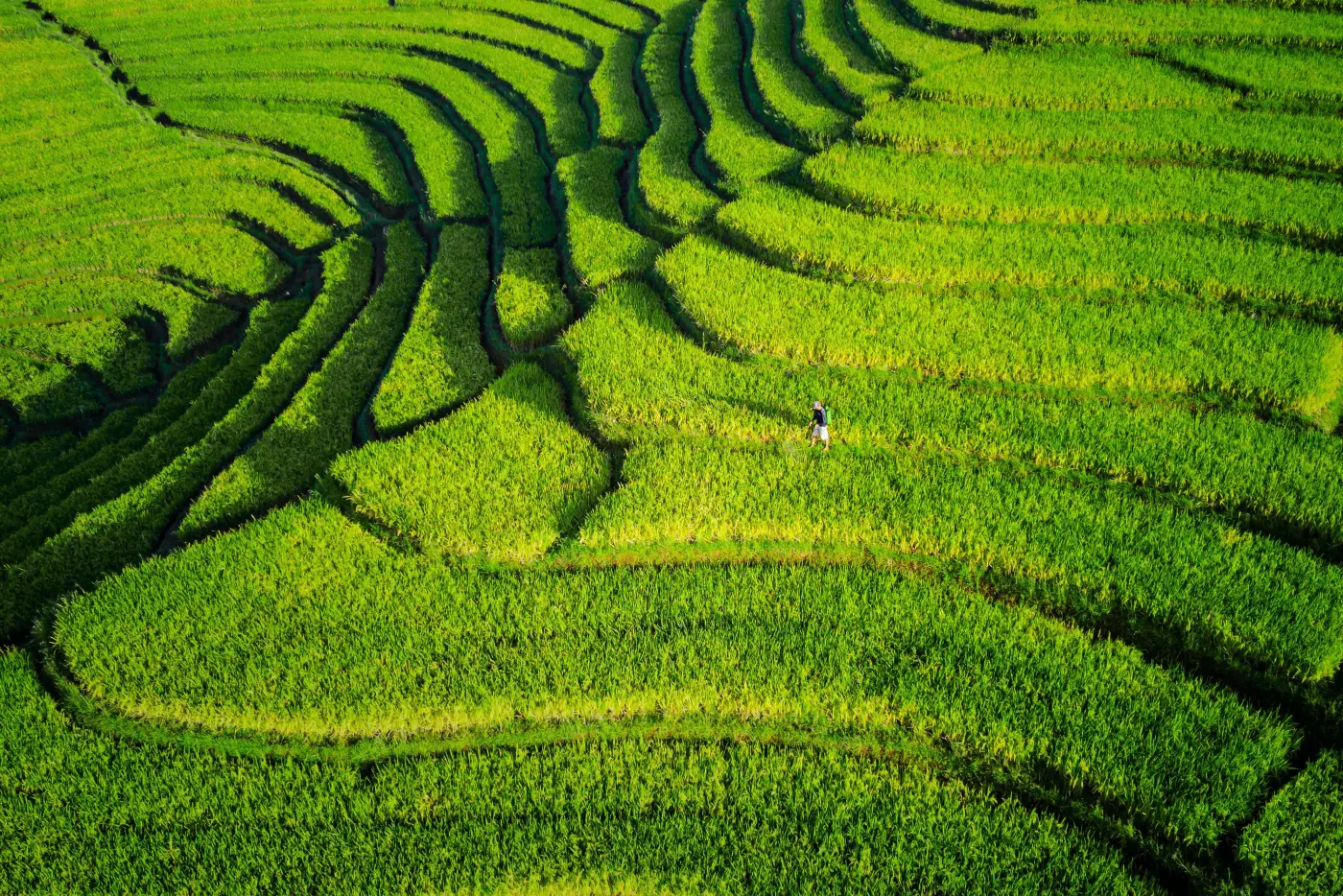
Rural China's hillsides, carved into narrow, stacked terraces that follow the contour of the slope, are one of the clearest visual signatures of intensive subsistence agriculture anywhere in the world; similar terracing appears across the Philippines, Indonesia, and Nepal for the same reason, to squeeze cultivable area out of land too steep to farm any other way.
How this compares to US and EU farm scale
Neither the USDA's National Agricultural Statistics Service (NASS) nor Eurostat tracks "subsistence farming" as a category; both classify farms by economic output value, not by whether the harvest is sold or eaten at home. The closest working proxy is their smallest size and revenue tiers, and the gap those numbers reveal is worth seeing in concrete terms.
| Region | Data source | What it shows |
|---|---|---|
| Typical intensive subsistence plot | Regional agricultural census data (Asia) | Under 2 hectares (about 5 acres), commonly 0.1 to 4 hectares |
| United States | NASS, 2022 Census of Agriculture | 1.9 million farms, averaging 463 acres, across 880 million total acres of agricultural land |
| European Union | Eurostat, 2023 Farm Structure Survey | 8.8 million holdings across 156 million hectares; 62.8% of all EU farms are under 5 hectares |
| EU semi-subsistence tier | Eurostat, 2023 Farm Structure Survey | 2.9 million holdings with annual output under €2,000, together producing just 1% of EU agricultural output |
The scale gap is roughly 90 to 1: a 463-acre average US farm against a sub-2-hectare (about 5-acre) intensive subsistence plot. The EU's own numbers make the same point without leaving the continent, since Eurostat's official statistics still capture farms this small: its 2.9 million semi-subsistence holdings, plus another 2.5 million holdings in the €2,000 to €8,000 output band, add up to roughly 5.4 million farms, nearly two-thirds of all EU holdings by count, yet together they produce under 5% of the EU's total agricultural output. It's the same pattern intensive subsistence farming represents everywhere it's practiced: a very large number of small producers whose combined land and labor matter enormously for local food security, but who barely register in market-facing production statistics.
Characteristics of intensive subsistence agriculture
Six traits, taken together, are what separate intensive subsistence farming from every other agricultural system.
01. Very small, fragmented landholdings
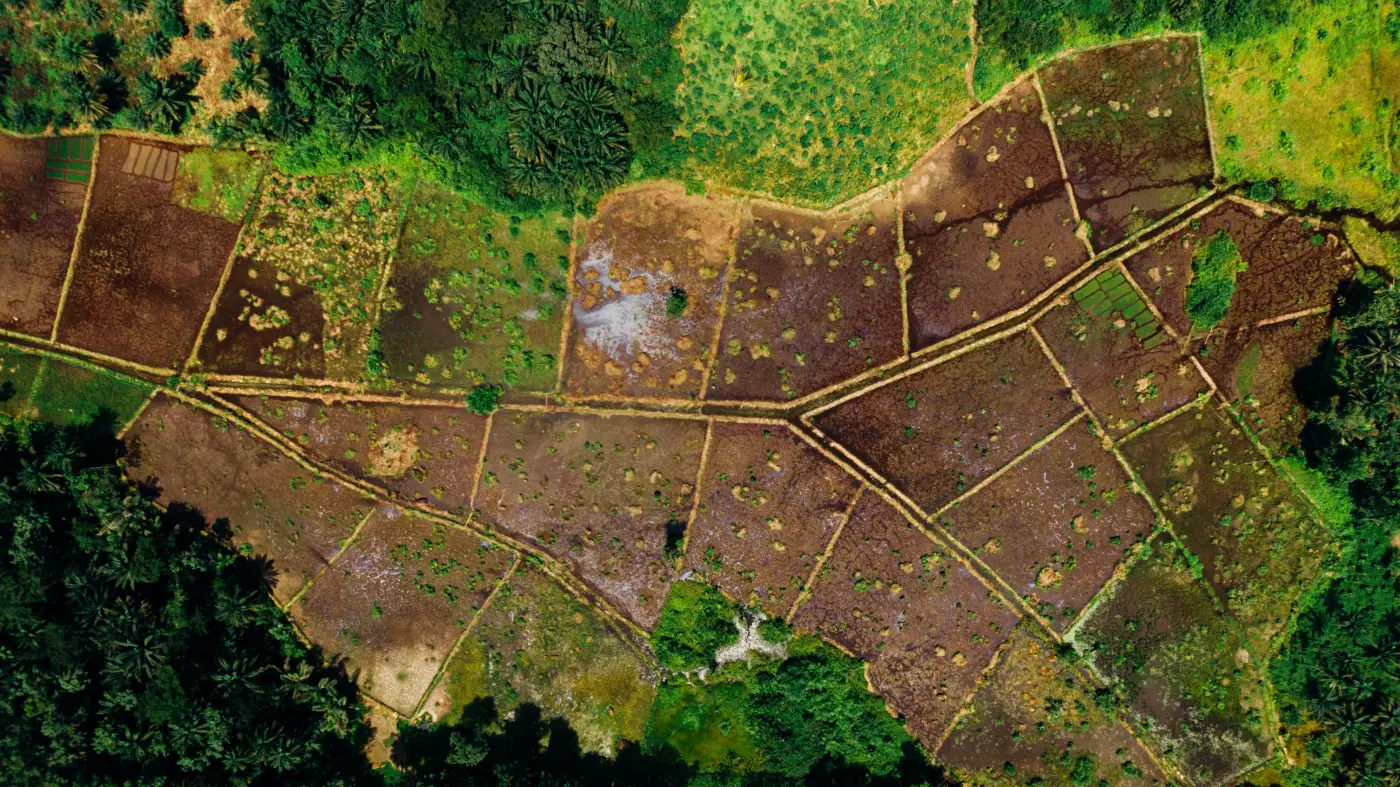
The entire arable area is split into numerous small plots, each managed separately by a household trying to feed itself, not run a business (see the regional averages in the table above). That scale makes it structurally hard to afford inputs: there's no capital cushion for a bad season, and no economies of scale to spread the cost of seed, fertilizer, or equipment rental across a larger area the way a bigger operation can.
02. Farming is intensive in both time and space
Spatially, nearly every usable patch is cultivated, leaving only narrow ridges as footpaths in flat paddies and tightly packed terraces on hillsides; even marginal land, swamps drained, dry patches irrigated, gets brought into production. Temporally, the land is rarely left bare: a new crop goes in as soon as the last is harvested, and multiple cropping or relay cropping across layers is common wherever the growing season allows it.
03. Heavy reliance on hand labor
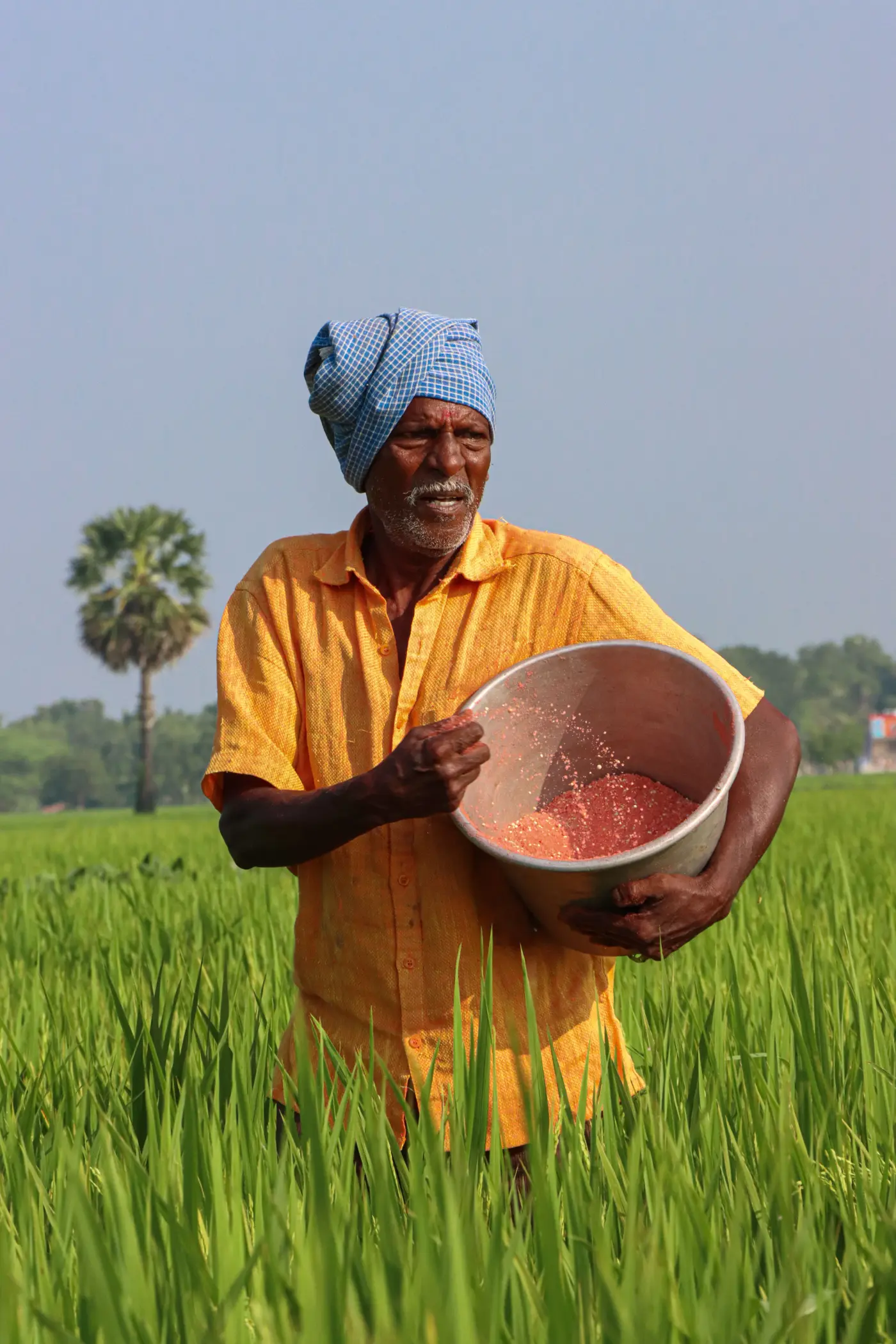
Since machinery costs money and labor is what the household has in abundance, tillage is often still done with draft animals and hand tools, and harvesting with sickles, even where tractors exist nearby. That trade-off gives intensive subsistence agriculture unusually low output per unit of labor but high output per unit of land, the reverse of mechanized commercial farming. Mechanization is creeping in regardless: as equipment prices fall and rental markets for machinery expand, farmers in parts of India, Japan, and China increasingly hire machine time when it's accessible and affordable, rather than owning it outright.
04. Heavy reliance on animal and plant manures, with rising chemical input use
Limited cash historically pushed farmers toward bio-fertilizers, compost, farm waste, and animal dung, over purchased chemical fertilizer, which had the side effect of being gentler on the soil and the surrounding environment. As synthetic fertilizer, pesticide, and insecticide prices have fallen and government subsidy programs have expanded access, that balance has shifted in many regions, and intensive subsistence farming is increasingly associated with heavier agrochemical use aimed at maximizing yield from a fixed, shrinking plot. Where farmers keep manures and bio-fertilizers in the rotation alongside modern inputs, the system stays closer to self-sustaining and puts less cumulative stress on the soil.
05. Dominance of paddy rice and other staple food crops
Wet rice is the signature crop of intensive subsistence agriculture across South, East, and Southeast Asia, but it's far from the only one. Wheat, soybeans, and barley dominate in northern China, Japan, Korea, and parts of India like Punjab; millet and sorghum fill in where rainfall is too unreliable for rice; maize is commonly rotated in at one point in the year, and peas or other vegetables are intercropped alongside it. Which crop wins out is almost entirely a function of local rainfall, soil, and topography.
06. Limited access to credit and financial services
Because there's rarely a surplus to sell, there's no reliable income stream to repay a loan against, and because the system is mostly rainfed, a single bad monsoon can wipe out a season's output entirely. That combination makes formal credit hard to get and risky to take on. Mobile-money and digital microfinance platforms have started to close part of that gap in parts of South Asia and East Africa over the past few years, but access still lags far behind what commercial farms take for granted.
Intensive cultivation techniques that define the system
"Intensive cultivation" isn't just a description, it maps to specific, repeatable techniques that farmers use to raise output from a fixed area of land.
| Technique | What it does |
|---|---|
| Terracing | Cuts stepped, level platforms into sloped land, turning hillsides that would otherwise erode or go unused into farmable, water-retaining plots. |
| Multiple cropping | Grows two or more crops on the same plot within a single year instead of one, directly raising output per hectare without adding land. |
| Wet rice cultivation | Floods paddies to suppress weeds and pests, then hand-transplants rice seedlings from a nursery bed, a labor-intensive process that raises yield well above direct seeding. |
| Marginal land reclamation | Drains swamps or irrigates dry land to bring soil that's normally unusable into active cultivation. |
| Intercropping | Plants a second, often shorter or shade-tolerant crop, like peas or vegetables, alongside a main crop such as maize to use the same plot more fully. |
The standard way to measure how intensively a plot is being farmed is cropping intensity: the ratio of gross cropped area (total area sown across every growing season in a year, counting a plot more than once if it's cropped more than once) to net sown area (the physical land area itself), expressed as a percentage.
Cropping intensity = (Gross cropped area ÷ Net sown area) × 100
A farmer who plants the same 1-hectare plot with two full crops in a year, say rice in the wet season and wheat or vegetables in the dry season, runs a cropping intensity of 200%. High cropping intensity, often 150 to 200% or more in intensive subsistence systems, is direct numerical evidence of just how hard a small plot is being worked to substitute for the land the farmer doesn't have.
Subsistence farming vs. intensive, extensive, and commercial farming
These four terms get mixed up constantly because they describe different axes: subsistence versus commercial describes who the output is for, while intensive versus extensive describes how land is used to get there. A farm can combine any goal with either land-use strategy.
| Factor | Subsistence farming | Intensive farming | Extensive farming | Commercial farming |
|---|---|---|---|---|
| Primary goal | Feed the farmer's own family | Maximize output per unit of land | Maximize output per unit of labor/capital, using more land | Generate profit through market sale |
| Typical scale | Small, often under 2 hectares | Small to medium, worked hard | Large land area, lightly worked | Large, mechanized |
| Labor input | High, manual | High per hectare | Low per hectare | Low per hectare (machine-substituted) |
| Capital input | Very low | Moderate to high | Low | High |
| Output destination | Household consumption | Market or household, depending on context | Market, typically livestock or grain | Market |
| Example | A one-hectare rice-and-vegetable plot in rural Vietnam | Intensive subsistence rice terracing, or commercial greenhouse cropping | Cattle ranching on open rangeland | A mechanized 500-hectare wheat farm |
Note that "intensive" and "subsistence" aren't opposites, which is the most common source of confusion: intensive subsistence farming is simply the intensive land-use strategy applied to a subsistence goal. Its mirror image is intensive commercial farming, such as greenhouse market gardening, where the same high-labor, high-input approach on a small plot is aimed at a paying market instead of a family dinner table. That paying-market side of the equation, growing a crop specifically to sell rather than eat, is covered in full in our guide to what a cash crop is.
How satellite imagery and precision agriculture are reaching subsistence farmers
Precision agriculture and subsistence farming used to sit at opposite ends of the spectrum: one associated with well-capitalized, large-scale operations, the other with farmers who can't afford a soil test kit, let alone a satellite subscription. That gap is narrowing. Research into precision agriculture on small, intensively farmed plots, especially where several smallholdings sit in a cluster, has found that meaningful variability in soil type, moisture, nutrient availability, and topography exists even within a fraction of a hectare, which means the case for targeted, field-specific data doesn't disappear just because the field is small.
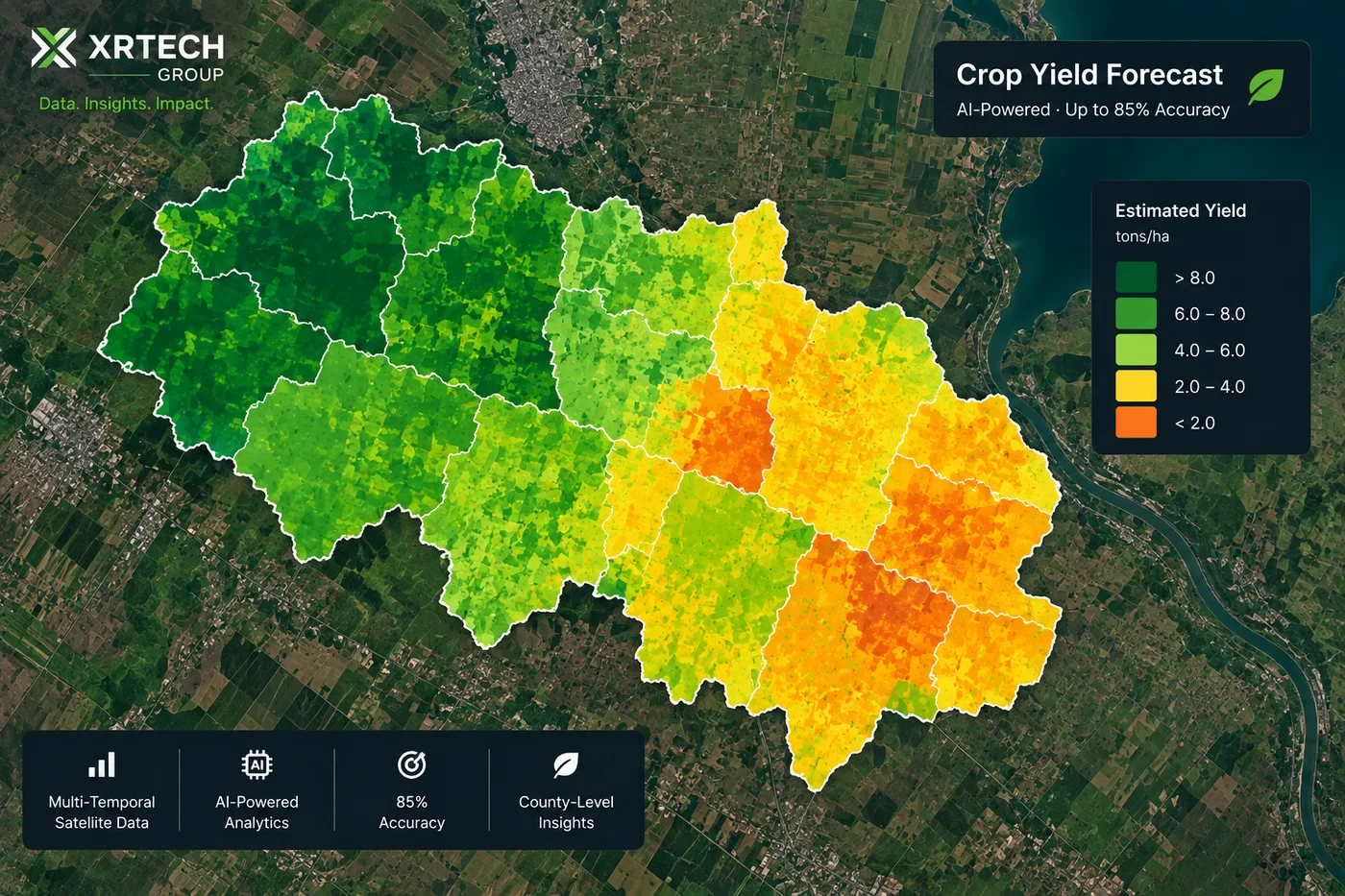
Adoption is still the limiting factor rather than the technology itself. Recent studies put precision agriculture usage at roughly 24% among the farmers surveyed, meaning the large majority still farm without it, and cost, training, and unreliable rural connectivity remain the main barriers, on top of the limited credit access described above. Where adoption is happening, it's increasingly delivered as a shared service rather than an individual purchase: regional extension programs and cooperatives use satellite imagery and computer analysis centrally, then share field-specific results back with individual smallholders, spreading the cost of the imagery and the analysis across many small farms instead of one.
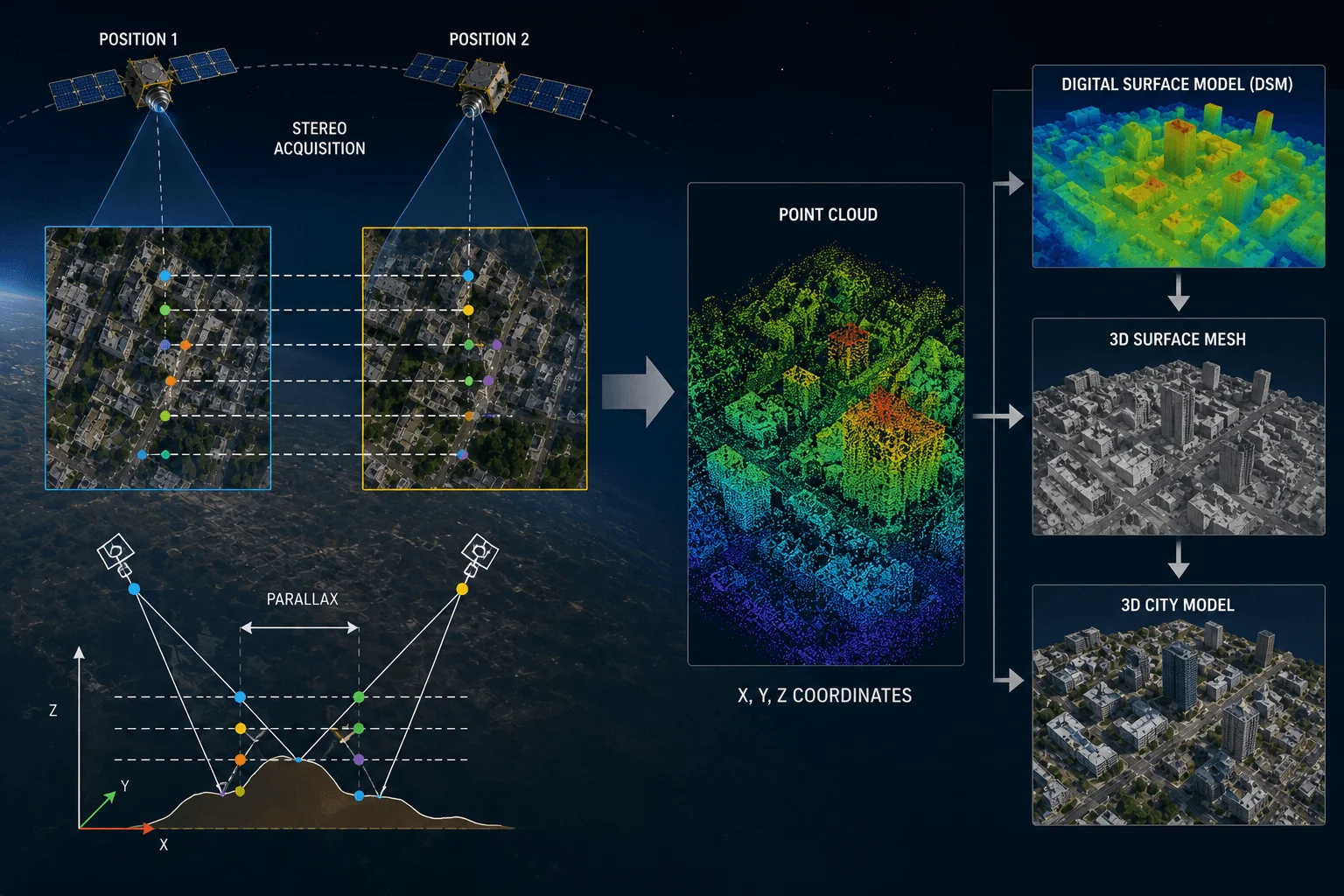
Open-access optical data from Sentinel-2 and free cloud-processing environments like Google Earth Engine have done the most to make this practical, since they remove the licensing cost that used to put satellite-based monitoring out of reach for smallholder programs. Layering in very-high-resolution commercial imagery where a program can afford it adds the field-boundary and terrace-level detail that a fragmented, few-hectare landscape actually needs, since a single 10 m Sentinel-2 pixel can straddle two or three separate smallholder plots on the ground.
Key takeaways
- Intensive subsistence farming means working small, often fragmented landholdings (commonly under 2 hectares) as intensively as possible to feed one family, not to sell into a market.
- It's most concentrated across monsoon Asia, China, India, Bangladesh, Vietnam, Indonesia, and the Philippines, where reliable rainfall and dense rural populations make wet rice terracing the dominant system.
- "Intensive" describes land-use strategy, and "subsistence" describes the goal; they aren't opposites, and each pairs independently with "extensive" and "commercial" to describe four distinct farming systems.
- Cropping intensity, gross cropped area divided by net sown area, is the standard way to measure how hard a plot is being worked; intensive subsistence systems commonly run 150 to 200% or higher.
- The scale gap is roughly 90 to 1: the average US farm runs about 463 acres (NASS, 2022) against a typical sub-2-hectare intensive subsistence plot; even inside the EU, Eurostat's smallest 5.4 million holdings produce under 5% of total farm output.
- Only about 24% of surveyed farmers currently use precision agriculture tools, but shared, cooperative-delivered satellite monitoring is starting to bring field-level data to smallholder clusters that could never afford it individually.
Frequently asked questions
What is intensive subsistence farming?
Intensive subsistence farming is a form of subsistence agriculture in which farmers work small, often fragmented landholdings as intensively as possible, through terracing, multiple cropping, and heavy manual labor, to produce enough food for their own family with little or no surplus for sale. It's most common in densely populated, monsoon-affected regions of Asia.
What is subsistence agriculture?
Subsistence agriculture is farming done to feed the farmer's own household rather than to sell into a market. Output is consumed directly by the family that grew it, with little or no surplus left over to trade, and it's considered the earliest form of agriculture practiced by humans.
What is the difference between subsistence farming and intensive farming?
Subsistence farming describes who the output is for (the farmer's own family), while intensive farming describes how the land is used (high labor and input per unit of area to maximize yield). The two aren't opposites and combine directly in intensive subsistence farming, which applies an intensive, high-labor approach to a subsistence goal on a small plot.
What is the difference between intensive and extensive farming?
Intensive farming maximizes output on a smaller land area using high labor, capital, or input per hectare, such as fertilizer, irrigation, or machinery. Extensive farming cultivates a larger land area with lower input per hectare, relying more on natural resources than concentrated effort, and is typically associated with livestock grazing or large-scale, lightly managed crop production.
Where is intensive subsistence farming practiced?
Intensive subsistence farming concentrates across monsoon Asia, particularly China, India, Bangladesh, Vietnam, Indonesia, and the Philippines, where reliable rainfall and warm temperatures support wet rice cultivation on very small, densely populated landholdings. Smaller pockets also exist in parts of Europe and North America on small countryside households.
Is shifting cultivation intensive or extensive?
Shifting cultivation, also called slash-and-burn farming, is classified as extensive rather than intensive, since it uses a large land area with comparatively low input per plot and depends on abandoning and rotating land rather than working the same plot continuously. It falls under subsistence farming because output is for the farmer's own use, not for sale.
What is a subsistence farmer?
A subsistence farmer is someone who farms primarily to meet their own and their family's basic food needs, typically cultivating a small plot with traditional, labor-intensive methods and simple tools rather than machinery. Crops grown are mostly consumed by the household, with little or no surplus produced for trade or sale.
What is the difference between subsistence farming and commercial farming?
Subsistence farming aims to meet a household's own food needs on a small plot with minimal surplus, while commercial farming aims to generate profit by producing crops or livestock for sale, typically on larger land areas using machinery and purchased inputs to maximize yield and market output.
Why do people search for "substantial farming" when they mean subsistence farming?
"Substantial farming" and "subsistence farming" sound similar but mean nearly opposite things. Subsistence farming produces just enough food for a family's own needs, often on a small plot with little or no surplus, while "substantial" implies large-scale output, which is closer to what commercial or industrial farming describes.
What is cropping intensity, and how is it calculated?
Cropping intensity measures how many times land is cropped within a year. It's calculated as (Gross Cropped Area divided by Net Sown Area) multiplied by 100. A plot cropped twice in a year, once with rice and once with vegetables, has a cropping intensity of 200%, and intensive subsistence farms commonly run at 150% or higher.
Where is intensive subsistence wet rice farming dominant?
Intensive subsistence wet rice farming is dominant across densely populated parts of Asia, particularly China, India, Indonesia, Vietnam, and Bangladesh, where high rainfall, fertile soils, and terracing or irrigation support labor-intensive, hand-transplanted rice cultivation in flooded paddy fields.
How does intensive subsistence farming compare to US or EU farm sizes?
The gap is roughly 90 to 1. The USDA's 2022 Census of Agriculture put the average US farm at 463 acres, while a typical intensive subsistence plot runs under 2 hectares, about 5 acres. Eurostat's 2023 Farm Structure Survey shows the comparison holds even inside the EU: 62.8% of all EU farms are under 5 hectares, and 2.9 million semi-subsistence holdings with under €2,000 in annual output produce just 1% of the EU's total agricultural output.
Do the USDA or Eurostat track subsistence farming as an official category?
No. Neither NASS nor Eurostat classifies farms by subsistence intent; both track farms by economic output value instead. The closest working proxies are NASS's smallest farm-size and revenue tiers in the US, and Eurostat's semi-subsistence holdings, defined as farms with annual standard output under €2,000, in the EU.
Sources and further reading
- FAO: The number, size, and distribution of farms, smallholder farms, and family farms worldwide
- FAO: Small family farmers and smallholder contributions to global food production
- UNDP: Precision Agriculture for Smallholder Farmers
- ESA Copernicus: Sentinel-2 multispectral mission specifications
- Agricultural census and landholding-size data for India, China, and broader Asia
- USDA NASS: 2022 Census of Agriculture, farm count and size data
- Eurostat: Farm Structure Survey, 2023
Bring satellite-level detail to any size farm
Search our live optical, multispectral, and SAR archive or task new imagery over your fields, from a single smallholding to a full regional program, to track crop health, soil moisture, and field boundaries season to season.