Multiple Cropping: Types, Examples, and Benefits
On this page
- What is multiple cropping?
- A brief history of multiple cropping
- What are the benefits of multiple cropping?
- 01. More total harvest from the same land
- 02. Better use of sunlight, water, and soil nutrients
- 03. Fewer weeds
- 04. Lower pest and disease pressure than monocropping
- 05. Better soil fertility over time
- 06. More stable income and a more balanced diet
- 07. Higher farm income and export potential
- What are the types of multiple cropping?
- 01. Intercropping
- 02. Mixed cropping
- 03. Relay cropping
- 04. Sequential cropping
- How is multiple cropping measured? The multiple cropping index
- Multiple cropping examples from around the world
- What does multiple cropping require to work?
- How satellite imagery supports multiple cropping planning
- Frequently asked questions
- Sources and further reading
Multiple cropping is the simple idea of growing more than one crop on the same field in a single year, instead of planting just one crop and calling it done. It sounds small, but it is one of the oldest and most effective ways a farmer can raise how much food, and income, a piece of land produces without adding a single extra acre. This style of multiple farming has fed families and whole civilizations for thousands of years, and it is still spreading today across some of the world's biggest farming regions. This guide covers what multiple cropping means, the types of multiple cropping in use today, real multiple cropping examples from around the world, the research-backed benefits behind it, and how satellite imagery now helps track it at scale.
Quick answer
Multiple cropping means growing two or more crops on the same field within one year, instead of a single crop. The main types are intercropping (two or more crops grown together at the same time), relay cropping (a second crop is planted before the first is harvested, so their growing periods overlap), sequential cropping (one crop is planted right after the previous one is harvested, with no overlap), and mixed cropping (crops are sown together without fixed rows). Field studies show combining crops this way can raise total output per hectare by 20 to 85%, measured using a metric called the land equivalent ratio.
What is multiple cropping?
Multiple cropping is any farming system that grows two or more crop species on the same piece of land in the same year, rather than leaving it to grow only one crop, one time, per season. It is also called polyculture, since "poly" simply means many. The goal is straightforward: get more usable harvest out of the same amount of land, water, and sunlight, instead of letting the field sit idle or under-used between plantings.
It is easy to confuse multiple cropping with crop rotation, but they solve different problems. Crop rotation changes which single crop is grown on a field from one year to the next. Multiple cropping is about growing more than one crop within the same year, sometimes even in the same rows at the same time. The two ideas work well together: a farm can rotate its main crop year over year while also multiple cropping within each of those years.
Multiple cropping is most common on small, carefully worked fields, where every bit of land matters and the goal is usually to feed a family first and sell any extra second. It relies on locally adapted crop varieties, sometimes called landraces, that are already suited to growing closely alongside other plants in the same soil and season.
A brief history of multiple cropping
Multiple cropping is not a modern invention; it is one of the oldest farming strategies on record. Egyptian farmers were already multiple cropping along the Nile by around 300 BC, timing plantings to the river's annual flood cycle so more than one harvest could come from the same strip of fertile land. In Mesoamerica, the Maya developed the "three sisters" system, corn, beans, and squash grown together in the same mound, where the corn gives the beans something to climb, the beans add nitrogen back into the soil, and the squash's broad leaves shade out weeds. High in the Andes, the Inca built stepped terraces and grew multiple crops side by side at different elevations to spread out their risk against frost and drought. Across Indonesia, a tradition called tumpang sari has long paired rice with vegetables and legumes in the same plot. None of these were accidents; each culture arrived at multiple cropping independently because it worked.
What are the benefits of multiple cropping?
Every benefit below comes back to the same core idea: a field growing several crops together usually produces more total food, income, and soil health than the same field growing just one.
01. More total harvest from the same land
This is the headline benefit, and it has a real name: the land equivalent ratio, or LER. An LER above 1 means the combined crops produced more than separate single-crop fields of the same total size would have. Research on intercropped fields in Yunnan Province, China, measured yield gains of 33 to 85% over single-crop planting, with LER values between 1.31 and 1.84. A groundnut-and-sesame system reached an LER of 1.43, a 43% yield advantage, simply by sharing the same ground instead of splitting it into two separate fields.
02. Better use of sunlight, water, and soil nutrients
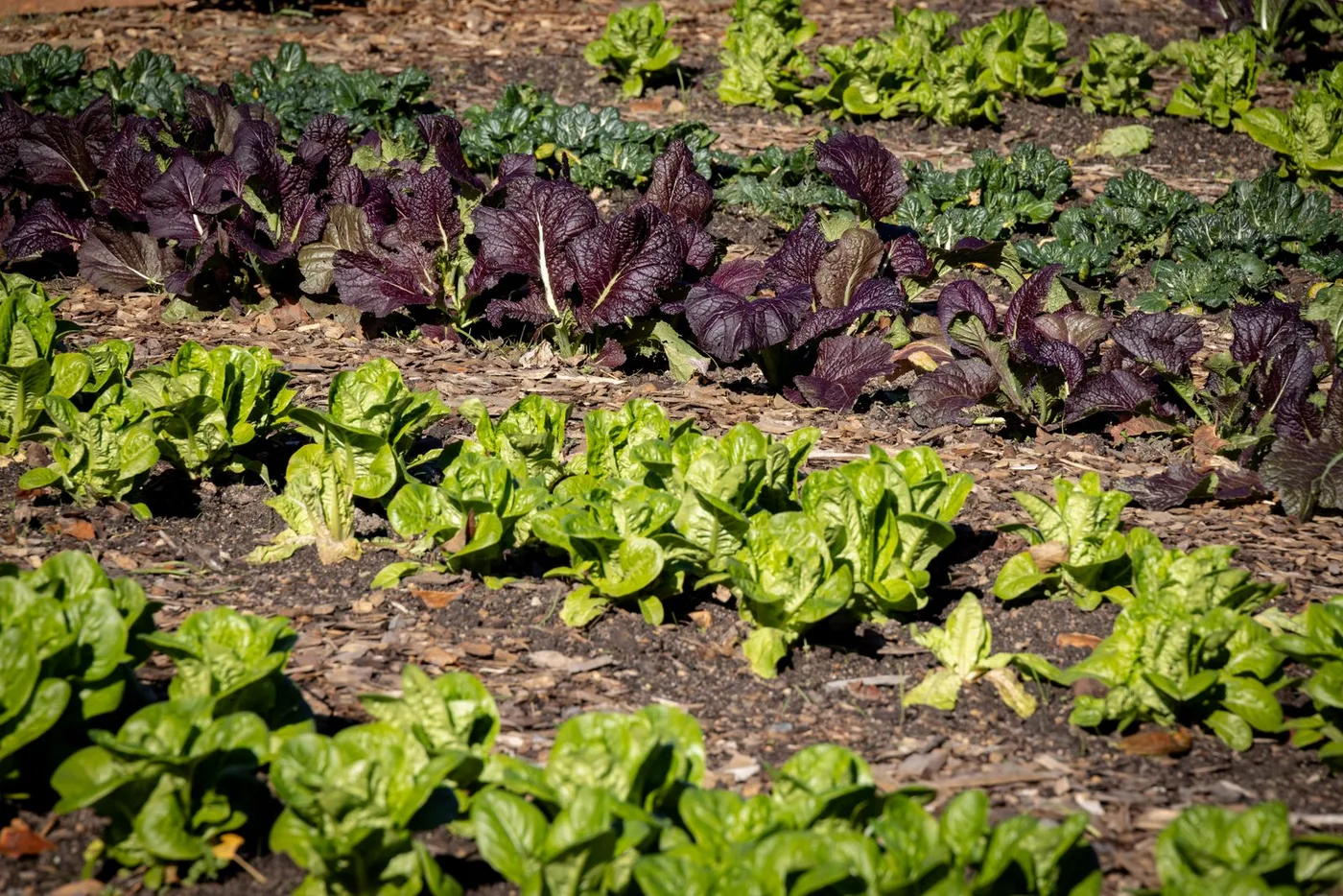
Different crops root at different depths, grow to different heights, and draw on different nutrients. Planting them together means the field captures more sunlight through the season, taps water and nutrients at more than one soil depth, and leaves less bare ground exposed to sun and wind. Little of the field's potential goes to waste.
03. Fewer weeds
A field with only one crop and open space between rows gives weeds plenty of room and light to establish. Multiple cropping fills that space with a second or third crop instead, so weeds simply have less bare ground and less light left to grow into.
04. Lower pest and disease pressure than monocropping
Pests and diseases usually specialize in one type of plant. A field planted with only that one crop gives them an unlimited, connected target. Mixing in other crop species breaks up that target, making it physically harder for a pest or pathogen to spread from plant to plant across the whole field, the same protective logic behind crop rotation, just applied within a single season instead of across years.
05. Better soil fertility over time
Pairing a nitrogen-hungry crop with a nitrogen-fixing legume, the same logic behind the Maya's corn-and-bean pairing, keeps soil nutrients more balanced instead of draining one nutrient season after season. Combined with the ground cover multiple cropping provides, it also helps protect topsoil, the same aim behind dedicated soil conservation methods like cover cropping and mulching.
06. More stable income and a more balanced diet
Relying on a single crop means a single bad season, a pest outbreak, a price crash, a drought, can wipe out a farm's entire income or food supply at once. Multiple cropping spreads that risk across several crops instead of one, and for families growing food for themselves, it also means a wider, more balanced mix of grains, vegetables, and legumes coming off the same small plot rather than just one staple.
07. Higher farm income and export potential
More total harvest per hectare, at lower added cost, translates directly into more product a farm can sell. At a national level, that same effect scales up: countries with strong multiple cropping systems are able to produce a wider range of crops for both domestic use and export, without needing to bring more land into production.
See what's actually growing on a field before you plan next season
Search our live archive or task new satellite imagery, from 30 cm optical to multispectral crop-health bands, to check crop type, canopy coverage, and vegetation health across every plot before adding a second or third crop to the mix.
What are the types of multiple cropping?
Every multiple cropping system falls into one of four types, grouped by how the crops share space and time on the same field.
| Type | How it works | Multiple cropping example |
|---|---|---|
| Intercropping | Two or more crops grow together at the same time on the same field, in rows, strips, or fully mixed | Maize planted in rows alongside climbing beans |
| Mixed cropping | Seeds of two or more crops are sown together without any fixed row pattern | Wheat and mustard seed broadcast together over the same plot |
| Relay cropping | A second crop is planted into the first crop's field before the first is harvested, so their growing periods overlap | Beans sown between standing rows of maize a few weeks before the maize is picked |
| Sequential cropping | One crop is planted immediately after the previous one is harvested, with no overlap in growing time | Wheat planted right after rice is harvested from the same field |
01. Intercropping
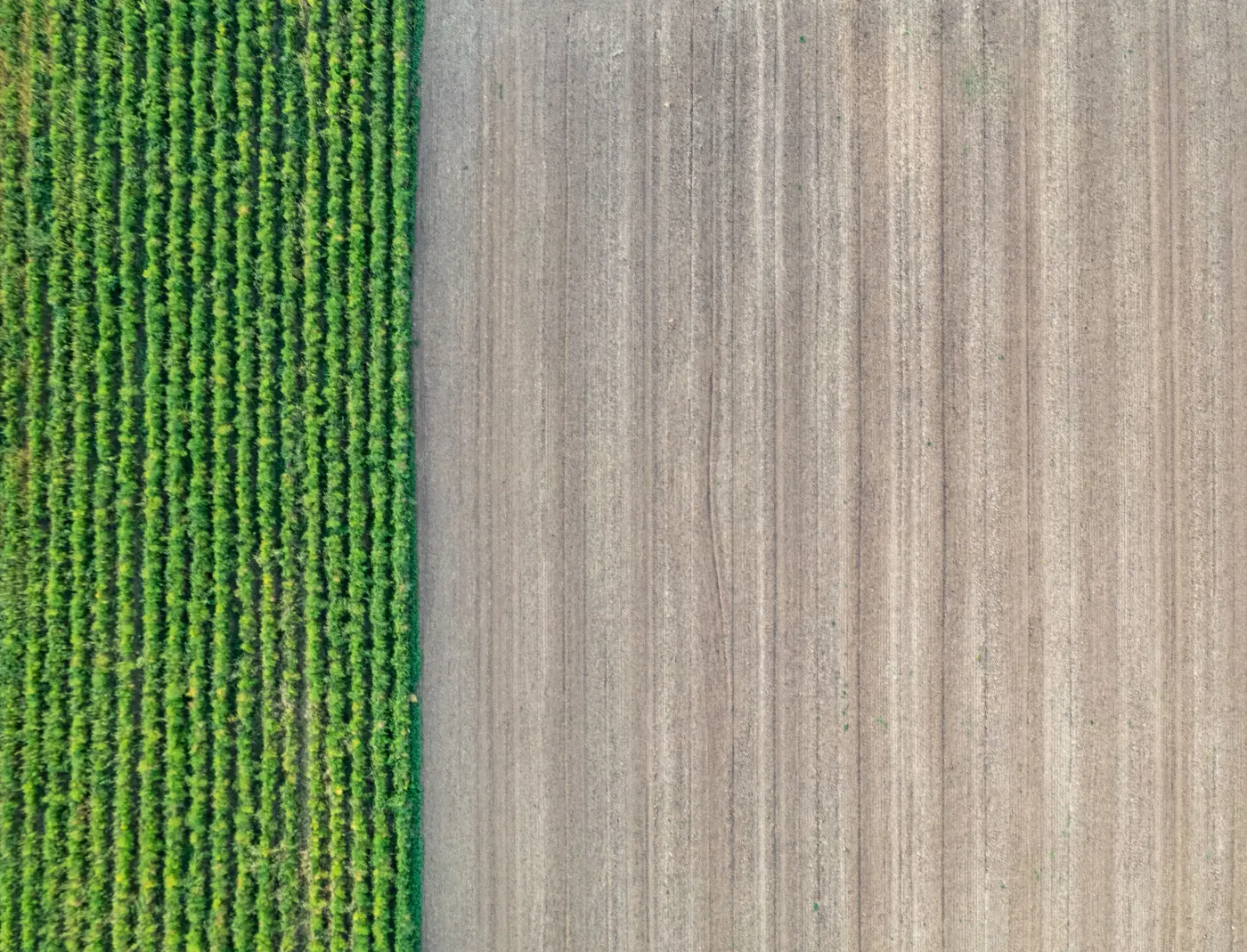
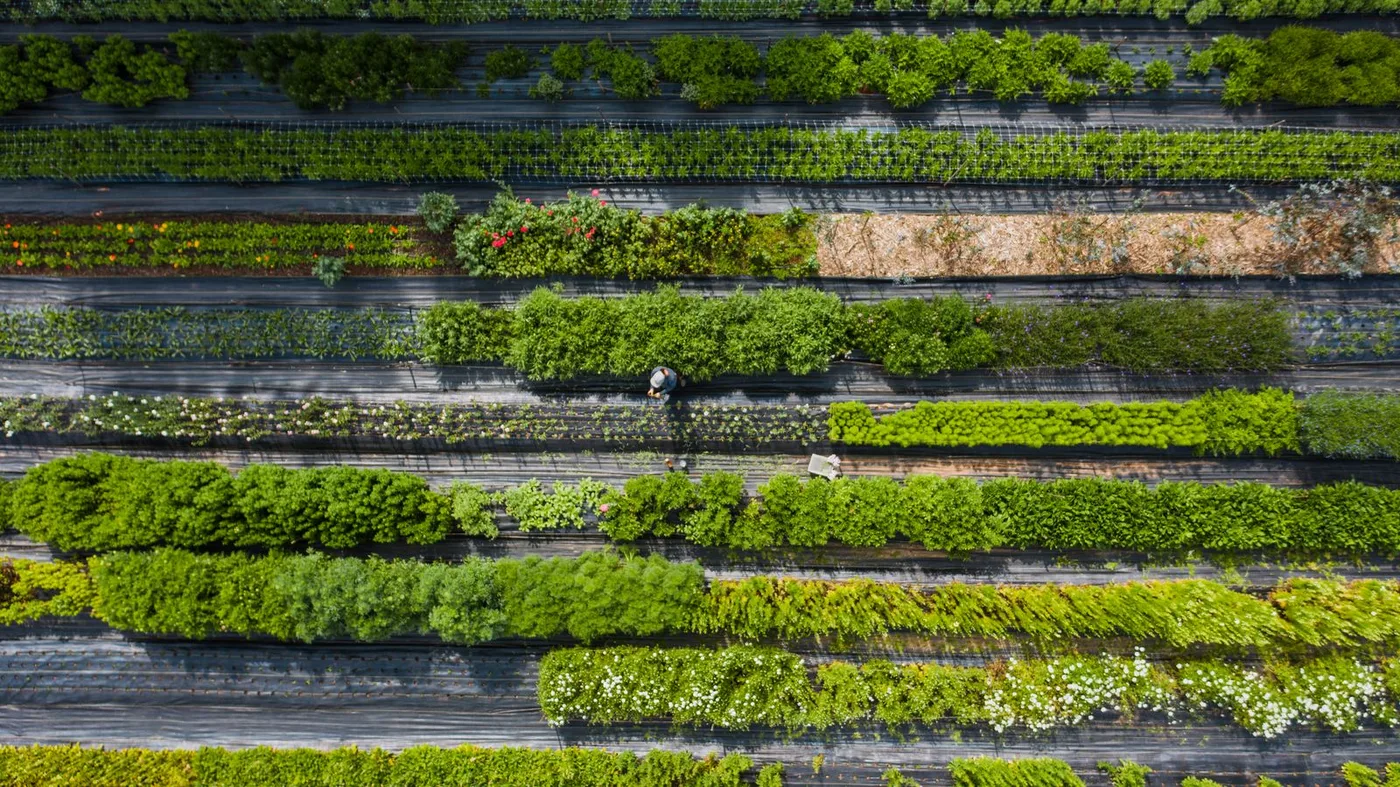
Intercropping plants two or more crops together in the same field during the same season, close enough that they interact directly. It comes in three common patterns: row intercropping, where crops are planted in alternating rows, such as maize and beans; strip intercropping, where wider strips of each crop are planted side by side, wide enough for machinery to manage each one separately; and mixed intercropping, where seeds are scattered together with no set arrangement at all. Whichever pattern is used, the crops share the field, and often the season, from planting to harvest.
02. Mixed cropping
Mixed cropping is a simple form of intercropping where two or more crops are sown together, often broadcast by hand, without organizing them into rows or strips at all. A classic multiple cropping example is wheat and mustard seed mixed at a set ratio, such as 2 parts wheat to 1 part mustard, and scattered across the same plot together. It takes the least planning of any multiple cropping type, which is part of why it remains common on small subsistence plots.
03. Relay cropping
Relay cropping plants a second crop into the same field before the first crop is harvested, so the two overlap in time for part of the season. A common example is sowing bean seed between rows of standing maize a few weeks before the maize is picked; by the time the maize comes out, the beans are already established and growing on their own. Cotton followed by corn, and chickpea followed by upland rice, are used the same way in other regions. Relay cropping essentially compresses two growing seasons into less total time than planting them back to back.
04. Sequential cropping
Sequential cropping, also called successive cropping, plants the next crop only after the current one is fully harvested, with no overlap between them at all. Rice followed by wheat, or maize planted in the long rainy season followed by beans in the short one, are both common multiple cropping examples of this type. It is the most straightforward type to manage since there is never more than one crop in the ground at once, but it also makes the least use of any single stretch of calendar time compared with relay cropping or intercropping.
How is multiple cropping measured? The multiple cropping index
Agronomists and researchers track how intensively a piece of land is being farmed using the multiple cropping index (MCI), calculated by dividing a region's total harvested area by its total cropland area over a year. A field cropped once in a year scores 1; cropped twice, it scores 2; three times, 3. Satellite-based cropping intensity maps commonly show these same four levels, 0 for uncropped land, 1 for single cropping, 2 for double cropping, and 3 for triple cropping, across large regions at once. This connects directly to intensive subsistence farming, where a closely related measure, cropping intensity, is used to show just how hard a small plot is being worked to make up for its limited size.
Multiple cropping index = (Total harvested area ÷ Total cropland area) × 100
Multiple cropping examples from around the world
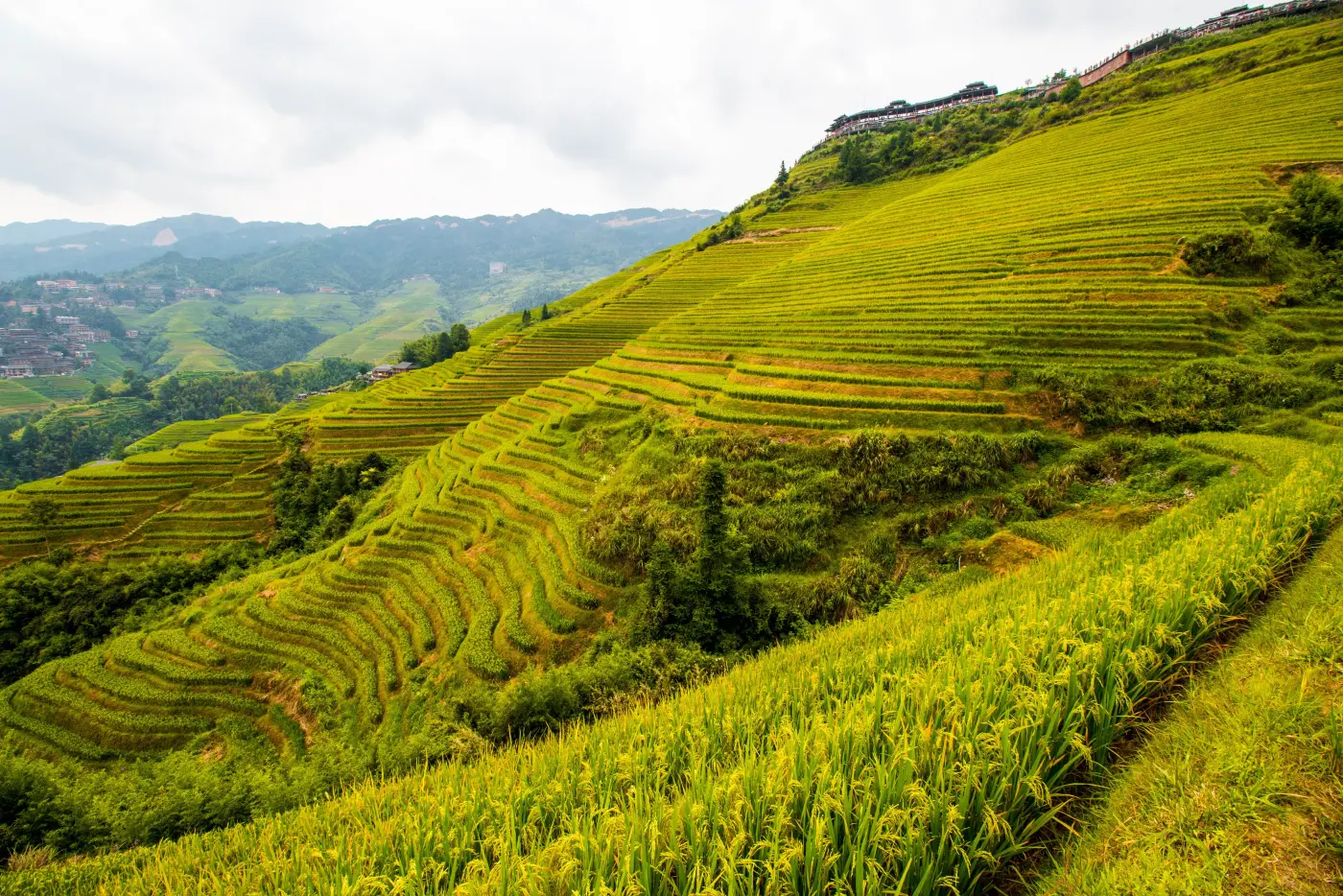
Multiple cropping is not a fringe practice; it covers a meaningful share of the world's most important cereal crops. Roughly 34% of global rice area, 13% of wheat area, and 10% of maize area are grown under some form of multiple cropping rather than a single planting per year. Between 2001 and 2020, farmland converting from single-cropping to double-cropping expanded across about 198.1 million hectares worldwide, concentrated mainly in China's North China Plain and northern India, two of the regions with the longest history of intensive land use. Researchers estimate that expanding cropping intensity in the regions best suited for it could raise the world's total harvested area by 7 to 31%, without clearing a single additional hectare of new farmland.
Multiple cropping, by the numbers
Range of measured yield gains from intercropping compared with single-crop planting, expressed as land equivalent ratio (LER) advantage.
LER range recorded in Yunnan Province, China intercropping trials; any value above 1.0 means the combined crops outproduced separate single-crop fields of the same total size.
Farmland converted from single- to double-cropping worldwide between 2001 and 2020, concentrated in China's North China Plain and northern India.
Share of global rice, wheat, and maize growing area, respectively, farmed under multiple cropping rather than one planting a year.
Potential increase in the world's total harvested area from raising cropping intensity in suitable regions, with no new land cleared.
What does multiple cropping require to work?
Multiple cropping is not a fit for every field, and it works best when a few conditions line up. A grower needs enough water, either reliable rainfall or irrigation, to support more than one crop cycle in the same year. Soil has to be fertile enough, or actively managed, to support overlapping crops without exhausting itself. Crop choice matters just as much: pairing crops with different root depths, heights, and nutrient needs, such as a shallow-rooted legume with a deep-rooted cereal, is what makes multiple cropping work rather than simply crowd the field. Finally, it takes decent knowledge of planting windows and rotation timing, since planting a second crop too early or too late can hurt both crops instead of helping either one.
How satellite imagery supports multiple cropping planning
Knowing exactly what is growing on a field, and when one crop ends and the next begins, used to depend entirely on a farmer's memory or a paper planting log. Satellite monitoring now tracks that automatically, at a scale no single person could walk in a season.
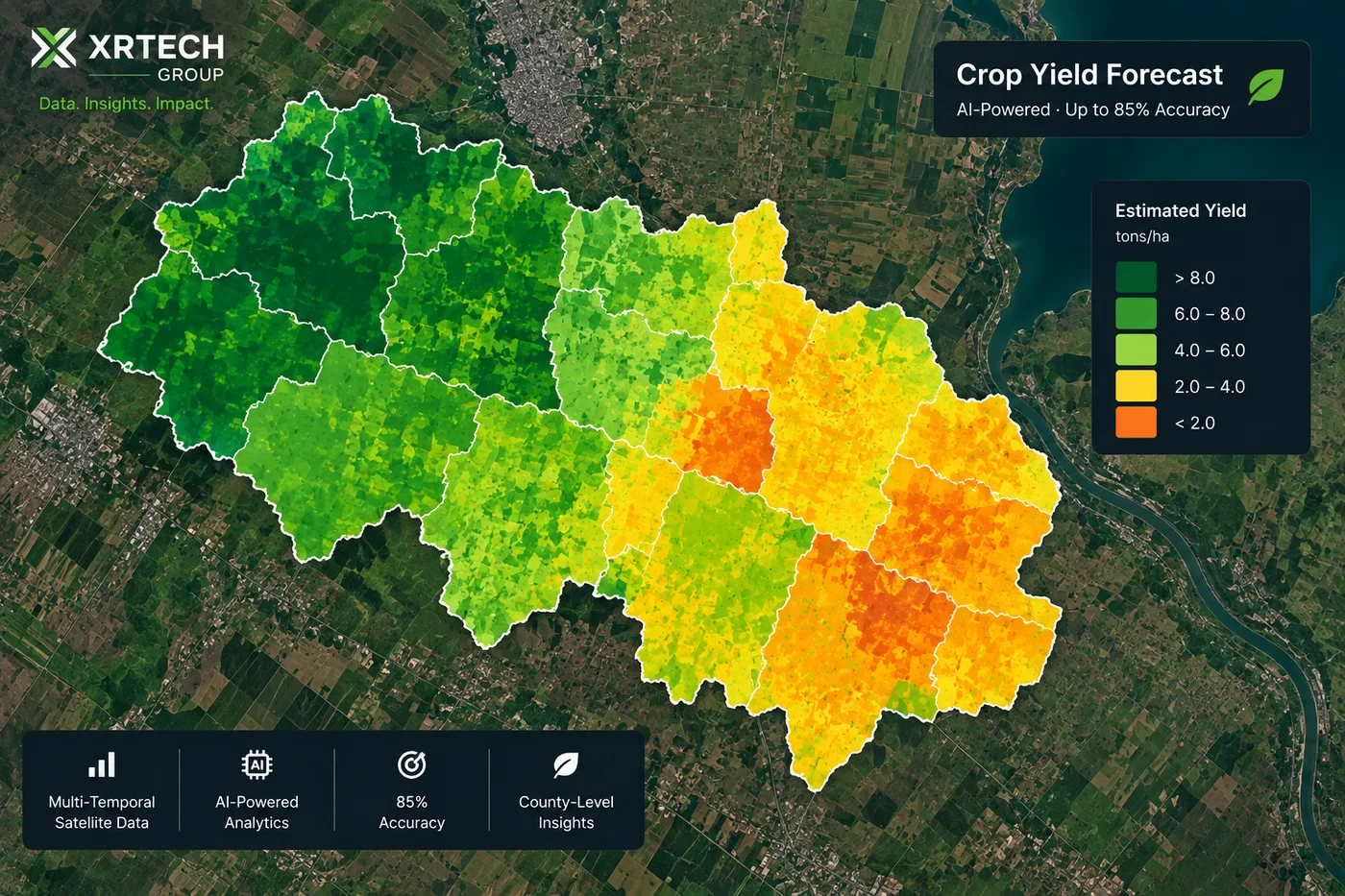
Multispectral sensors like Sentinel-2 capture a field every five days, with resolution down to 10 to 20 m, feeding NDVI vegetation-index time series that trace a crop's entire growth curve: emergence, peak canopy, and senescence at harvest. Two or three of those curves back to back over one year is exactly what shows up as double or triple cropping in a multiple cropping index map. Classification models trained on this kind of multi-temporal satellite data have reached accuracy above 90% at telling cropped land from fallow land and identifying which crop is growing in a given window. For a farm running satellite-based agriculture monitoring, the same imagery answers the practical question behind every multiple cropping plan: is the second or third crop actually establishing on schedule, and is the field's total output for the year tracking where it should.
Key takeaways
- Multiple cropping means growing two or more crops on the same field within one year; its four main types are intercropping, mixed cropping, relay cropping, and sequential cropping.
- It is one of the oldest farming strategies on record, practiced independently by ancient Egypt, the Maya, the Inca, and across Indonesia.
- Field research measures its benefit with the land equivalent ratio (LER); values of 1.2 to 1.84 have been recorded, meaning 20 to 84% more total output than single-crop fields of the same size.
- About 34% of global rice, 13% of wheat, and 10% of maize growing area is farmed under multiple cropping, and 198.1 million hectares converted from single- to double-cropping worldwide between 2001 and 2020.
- The multiple cropping index (harvested area ÷ cropland area) is the standard way to measure cropping intensity, and satellite NDVI time series from sensors like Sentinel-2 now map it automatically, field by field.
Frequently asked questions
What is double cropping?
Double cropping is a type of multiple cropping where two crops are grown and harvested from the same field within one year. It can be done sequentially, planting the second crop right after harvesting the first, or as relay cropping, planting the second crop before the first is fully harvested, and it is one of the most common ways farms raise total output without using more land.
What is an example of parallel cropping?
Parallel cropping, more commonly called intercropping, plants two or more crops in adjacent rows or strips within the same field at the same time. A common example is planting corn and beans in alternating rows, which lets the two crops share the same land and season while using light, water, and soil nutrients differently enough not to compete directly.
What are the requirements for multiple cropping?
Multiple cropping needs reliable water, either through rainfall or irrigation, fertile or well-managed soil that can support more than one crop cycle a year, crops chosen to complement rather than compete with each other in root depth and nutrient needs, and good timing knowledge so a second crop is planted at the right point in the first crop's growth cycle.
How does multiple cropping help farmers' income and food security?
Multiple cropping raises total output from the same land, often by 20 to 85% measured as land equivalent ratio, which increases both the food available to a farming household and the surplus available to sell. Growing several crops instead of one also spreads risk, so a poor season for one crop does not wipe out the household's entire income or food supply.
What is sequential cropping?
Sequential cropping is a type of multiple cropping where one crop is planted immediately after the previous crop is fully harvested, with no overlap in growing time between them. A common example is planting wheat in a field right after rice has been harvested from it, fitting two full crop cycles into one year.
What is the difference between multiple cropping and crop rotation?
Multiple cropping is about growing more than one crop on a field within the same year, sometimes at the same time. Crop rotation is about changing which single crop is grown on a field from one year to the next. The two are complementary and often used together: a field can rotate its main crop each year while also multiple cropping within each of those individual years.
What is the multiple cropping index?
The multiple cropping index (MCI) measures how many times land is cropped in a year. It is calculated by dividing total harvested area by total cropland area, so a value of 1 means single cropping, 2 means double cropping, and 3 means triple cropping. Satellite-based cropping intensity maps use this same 0-3 scale to track land use across entire regions.
What are some real multiple cropping examples?
Common multiple cropping examples include the Maya "three sisters" system of corn, beans, and squash grown together; maize intercropped in rows with beans; wheat and mustard seed mixed and sown together; beans relay-planted into a standing maize field before harvest; and rice followed by wheat in the same field within one year, common across parts of Asia.
Sources and further reading
- ScienceDirect: Multiple cropping systems of the world and the potential for increasing cropping intensity
- ScienceDirect: Developments and prospects of multiple cropping in China
- PMC/NCBI: Land equivalent ratio research on intercropping yield advantage
- PMC/NCBI: Spatial and temporal distribution of multiple cropping indices using remote sensing time series
- FAO: Cropping intensity and multiple cropping index statistics
- ESA Copernicus: Sentinel-2 multispectral mission specifications and NDVI crop monitoring
Track every crop in a multiple cropping plan from orbit
Search our live optical, multispectral, and SAR archive or task new imagery to follow NDVI growth curves, crop type, and canopy health across intercropped, relay, or sequential fields, season after season.