Advantages of Crop Rotation: Definition, Benefits, and How It Works
On this page
- What is crop rotation?
- A brief history of crop rotation
- What are the advantages of crop rotation?
- 01. Improves soil structure
- 02. Boosts soil fertility and nitrogen cycling
- 03. Prevents soil erosion
- 04. Breaks pest and disease cycles
- 05. Reduces weed pressure
- 06. Raises crop yield
- 07. Improves agrobiodiversity and soil microbial life
- 08. Lowers production costs and input use
- 09. Cuts greenhouse gas emissions
- Crop rotation examples and rotation models
- What to consider when planning a rotation
- Does crop rotation have any downsides?
- How satellite imagery verifies and supports crop rotation
- Frequently asked questions
- Sources and further reading
The advantages of crop rotation are the reason it has outlasted almost every other farming practice in history: it is one of the few techniques that raises yield, cuts input costs, and improves soil health at the same time, instead of trading one for another. Planting the same crop on the same ground year after year (monocropping or continuous cropping) drains specific nutrients, builds up crop-specific pests and pathogens, and leaves soil structure worse every season. Rotating crops breaks that cycle. This guide covers what crop rotation actually is, the research-backed benefits behind each advantage, how to plan a rotation, and how satellite monitoring now verifies crop diversification at a scale no farmer could track by eye.
Quick answer
Crop rotation is the practice of planting different crop species in a planned sequence on the same field across seasons or years, rather than growing the same crop continuously. Its main advantages are higher yields (diversified rotations have been measured raising yield by up to 38%), lower input costs from reduced fertilizer and pesticide use, better soil structure and fertility, fewer weeds, pests, and diseases, and lower greenhouse gas emissions, since rotations that include legumes can cut nitrous oxide emissions by around 39%.
What is crop rotation?
Crop rotation is a planned, multi-year sequence of different crops grown on the same field, designed so that each crop's demands on the soil, and its effect on pests, weeds, and disease, differ from the one planted before it. In the narrow sense, it's simply a pre-planned rotation of crops in time and space. In the broader sense, crop rotation is the organizing framework behind most crop production: it links what gets planted to how the soil is fertilized, protected, and rested, over a cycle that typically runs three to ten years depending on the crops involved.
Four things define any rotation plan: which specific crops are involved, how the arable land is divided into plots or blocks, the actual sequence and timing of planting across those plots, and, in some systems, a fallow or cover-crop period that lets a block rest. Done well, a rotation plan balances two goals that most growers care about most: better yield, for quantity and profit, and better long-term soil quality, so next year's crop and the one after that keep performing.
A brief history of crop rotation
Rotating crops is not a modern invention. Pliny the Elder described a form of it in Naturalis Historia in the 1st century AD, recommending that land be divided into three parts, one sown with a winter crop, one with a summer crop, and one left fallow. Medieval Europe's two-field system, roughly half the land fallow at any time to let it recover, evolved into the three-field system, which reduced fallow to about 20 to 30% of the land and added a legume, peas or beans, as the third field.
The real leap came with the Norfolk four-course system, developed in Belgium in the early 16th century and popularized in Britain in the 1700s. It eliminated the fallow year entirely, cycling wheat, turnips, barley, and clover or ryegrass across four fields every year, and is estimated to have fixed roughly three times more nitrogen into the soil than the rotations that came before it. That single change is a large part of why crop yields in Britain rose sharply during the agricultural revolution, and the same core logic, alternate a nitrogen-hungry crop with a nitrogen-fixing one, still anchors most rotation plans today.
What are the advantages of crop rotation?
Each advantage below addresses a specific, measurable problem that continuous cropping creates. Together, they explain why crop rotation benefits show up in soil tests, yield data, and input budgets all at once, not just one of the three.
01. Improves soil structure
Soil compaction, where soil pores are pressed too tightly for water, air, and roots to move through, chokes off plant growth even when nutrients are technically present, since a compacted soil sends a plant's own hormonal signals to slow shoot growth. Different crops root at different depths and in different patterns: a deep taproot breaks up compacted layers that a shallow-rooted crop never reaches. Rotating crops with different root architectures is one of the few practical ways to rebuild soil structure without heavy tillage.
02. Boosts soil fertility and nitrogen cycling

Every crop draws down a different mix of nutrients: peppers and tomatoes are heavy nitrogen users, for instance, which is why a nitrogen-fixing legume like soybean or clover often follows them in a rotation. Legumes host symbiotic bacteria in their root nodules that pull nitrogen from the air and fix it into a form the next crop can use; research on soybean-growing regions has measured biological nitrogen fixation as high as 150 kg per hectare, and a soybean crop in rotation can offset well over 180 kg of urea fertilizer per hectare on the following crop. Studies also show legumes in rotation raise soil nitrogen content by 20 to 40% and increase soil organic carbon stocks by around 8%, which is a large part of why rotations that include legumes are consistently linked to healthier long-term soil.
03. Prevents soil erosion
Bare, continuously cropped soil is exposed to wind and rain between harvest and the next planting, and that exposed top layer is the most fertile part of the field. Cereal rye, oats, and certain wheat varieties, along with cover crops like vetch and clover, hold soil in place with living roots and act as a physical shield against rainfall impact. The stakes are real: research estimates that up to 60% of eroded soil ends up carried into streams, lakes, and rivers, where it contributes directly to water pollution and sediment buildup. Rotating in a dense-rooted cover crop for even one season measurably reduces that loss.
04. Breaks pest and disease cycles
Continuous cropping, planting the same crop in the same plot repeatedly, lets soil-borne pathogens and pests that specialize in that crop build up year over year, since their host never leaves. Rotating in a non-host crop, one the pathogen or pest cannot use, interrupts that buildup entirely; the population has nowhere to persist between susceptible plantings. This is also the underlying reason many countries restrict importing unsealed produce: crop-specific pathogens travel with the plant, and rotation is one of the few ways to manage that risk at the field level once it's present.
05. Reduces weed pressure
Weeds thrive under stable, predictable conditions, the same planting depth, the same harvest timing, the same herbicide program, year after year. Rotating crops changes planting dates, canopy structure, and cultivation timing enough that weeds rarely get the multiple seasons they need to adapt and establish. A rotation that includes a dense, fast-canopying crop, like a cover crop or a small grain, further starves weeds of the light and space they need before the main cash crop even goes in.
06. Raises crop yield
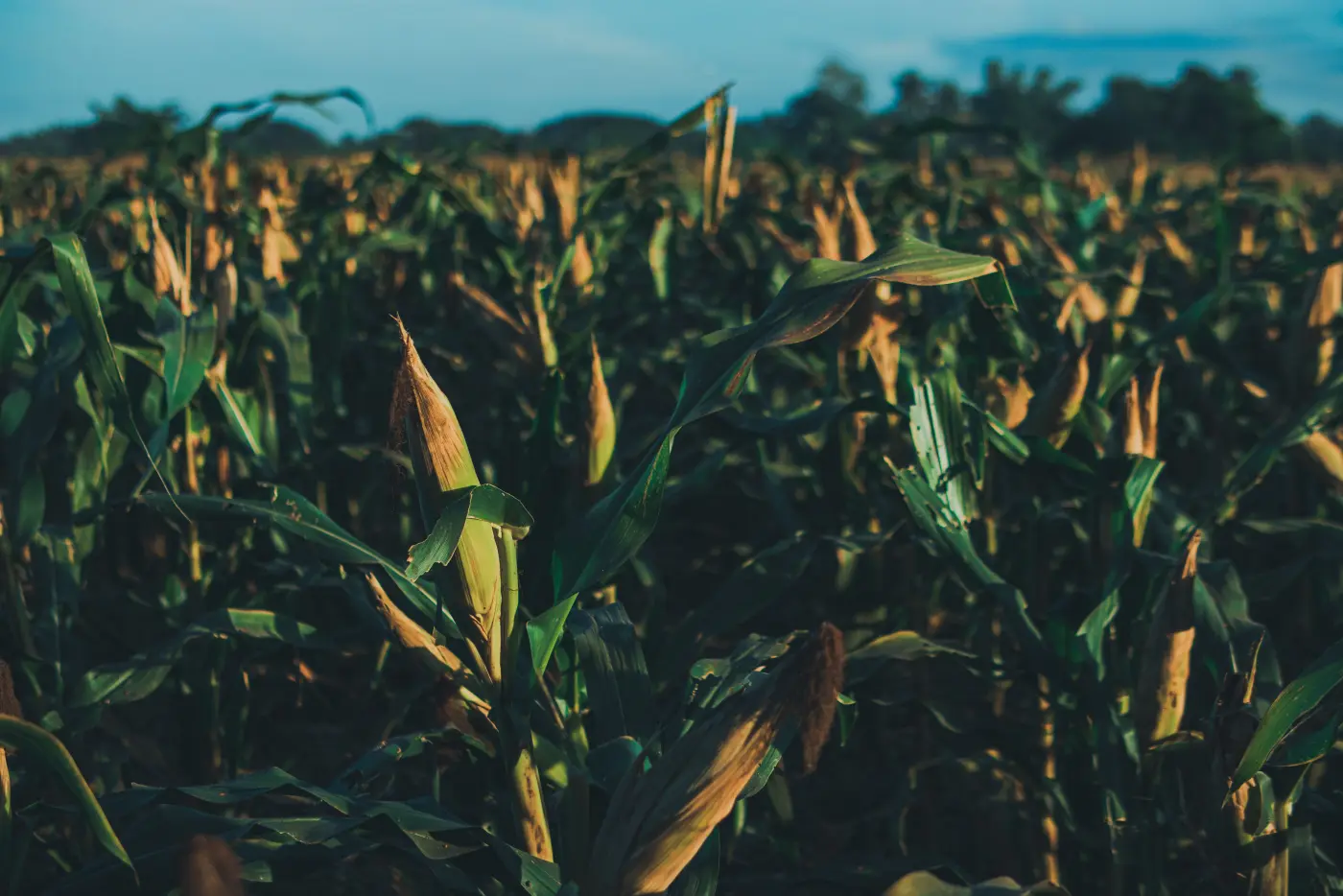
This is the advantage that gets a farm's attention fastest. Research comparing rotated to continuously cropped fields has found corn yield improvements of roughly 29% in a simple two-year corn-soybean rotation, rising further, in some trials past 48%, when a legume cover crop is added to a four-year rotation. Broader research on corn-soybean systems has recorded yield gains ranging from about 5% up to nearly 80% depending on soil and climate conditions, and a global study on diversified crop rotations published in Nature Communications measured equivalent yield increases of up to 38% compared to simplified, less diverse systems. The mechanism behind all of it is the same: healthier soil structure, better nutrient availability, and lower pest and disease pressure compound into a bigger harvest.
07. Improves agrobiodiversity and soil microbial life
A field growing one crop supports a narrow, specialized set of soil organisms. Rotating crops creates a shifting habitat that a much wider range of saprophytic microorganisms, invertebrates, and beneficial insects can use, and their combined metabolic activity over time increases soil organic content and water-holding capacity. Different crops also release different root exudates, organic compounds secreted into the soil around living roots, and varying that mix season to season is one of the more direct ways a rotation plan increases soil microbial diversity and biomass.
08. Lowers production costs and input use
Every other advantage on this list eventually shows up on the input budget. Less disease and pest pressure means less spent on pesticides. Better soil nutrient retention means less spent on fertilizer. More consistent ground cover and improved soil structure mean less water needed for irrigation. Farmers who diversify into three or four crops over a decade have reported both higher profits and higher yields in survey data, and reduced fertilizer use has a second-order benefit too: nutrients that stay in the crop instead of running off mean less nitrogen and phosphorus reaching nearby streams and lakes.
09. Cuts greenhouse gas emissions
This is the advantage that gets the least attention but has some of the strongest recent research behind it. A large-scale study on diversified crop rotations found they reduce nitrous oxide (N2O) emissions, a greenhouse gas roughly 270 times more potent than CO2 over a 100-year horizon, by around 39%, and improve a farming system's overall greenhouse gas balance by as much as 88% compared to simplified rotations. Legumes are again central to this effect: biological nitrogen fixation replaces synthetic nitrogen fertilizer, and synthetic nitrogen production and application is one of agriculture's largest sources of greenhouse gas emissions.
Crop rotation examples and rotation models
There's no single correct rotation; the right sequence depends on climate, soil, and what the market wants, but a handful of models cover most real-world use. Every one below follows the same underlying rule: alternate a nutrient-demanding crop with one that restores what the last crop took out. Several of the models below rotate in a cash crop specifically for the revenue it adds, not just the soil benefit.
| Rotation | Typical sequence | Why it works |
|---|---|---|
| 2-year rotation | Corn → Soybean | The most common US rotation; soybean fixes nitrogen the corn draws down heavily the following year |
| 3-year rotation | Wheat → Soybean → Corn | Widely used in organic production; wheat and corn are the main cash crops, soybean rebuilds soil nitrogen between them |
| 4-year Norfolk-style rotation | Wheat → Turnips → Barley → Clover | The historical model that eliminated fallow years entirely by pairing every cereal with a root crop or legume |
| 4-year rotation with cover crop | Legumes → Root vegetables → Fruiting crops → Leafy greens (with a winter legume cover crop) | A garden- and small-farm-scale sequence that layers a nitrogen-fixing cover crop onto a four-crop cycle |
| Extended cash-crop rotation | Wheat → Soybean → Corn → Potatoes | Adds a high-value root crop to the classic three-crop cycle for both soil benefit and higher per-acre revenue |
What to consider when planning a rotation
Before adding a new crop to a rotation, it's worth running through the same short list agronomists use to check that a crop actually fits the plan, rather than just filling a gap in the calendar.
| Question | Why it matters |
|---|---|
| What soil type does this crop need? | A crop mismatched to the field's texture or drainage underperforms regardless of where it sits in the rotation. |
| What climate and season does it require? | Warm-season and cool-season crops slot into different points in the yearly cycle. |
| What are the input and labor costs? | A crop that needs expensive inputs can erase the cost savings the rotation is meant to deliver. |
| Is there market demand for it? | Soil benefits matter less if there's nowhere to profitably sell the harvest. |
| Is there enough space and equipment for it? | Some crops need dedicated harvesting equipment or storage the farm may not already have. |
| Can a small grain or cover crop supplement it? | Adding a cover crop between main crops adds erosion control and nitrogen fixation without using a full rotation slot. |
Does crop rotation have any downsides?
Executed with a reasonable plan, crop rotation has very few real drawbacks, but it isn't risk-free. Weather variability and production-management mistakes, planting the wrong crop at the wrong time in the sequence, can still hurt a season regardless of how good the underlying rotation plan is. Rotation also asks more of a grower up front: multiple crops mean multiple sets of equipment, storage, and market relationships to manage instead of one.
There's one structural exception worth calling out directly: land that's exceptionally well suited to a single high-value crop faces a real tradeoff when local law requires crop diversification. Several major farming regions, including the European Union, legally require a minimum number of different crops on a given parcel over a multi-year period specifically to prevent long-term soil degradation from continuous monocropping, which means the choice to grow only the most profitable crop isn't always available even when the soil could technically support it.
How satellite imagery verifies and supports crop rotation
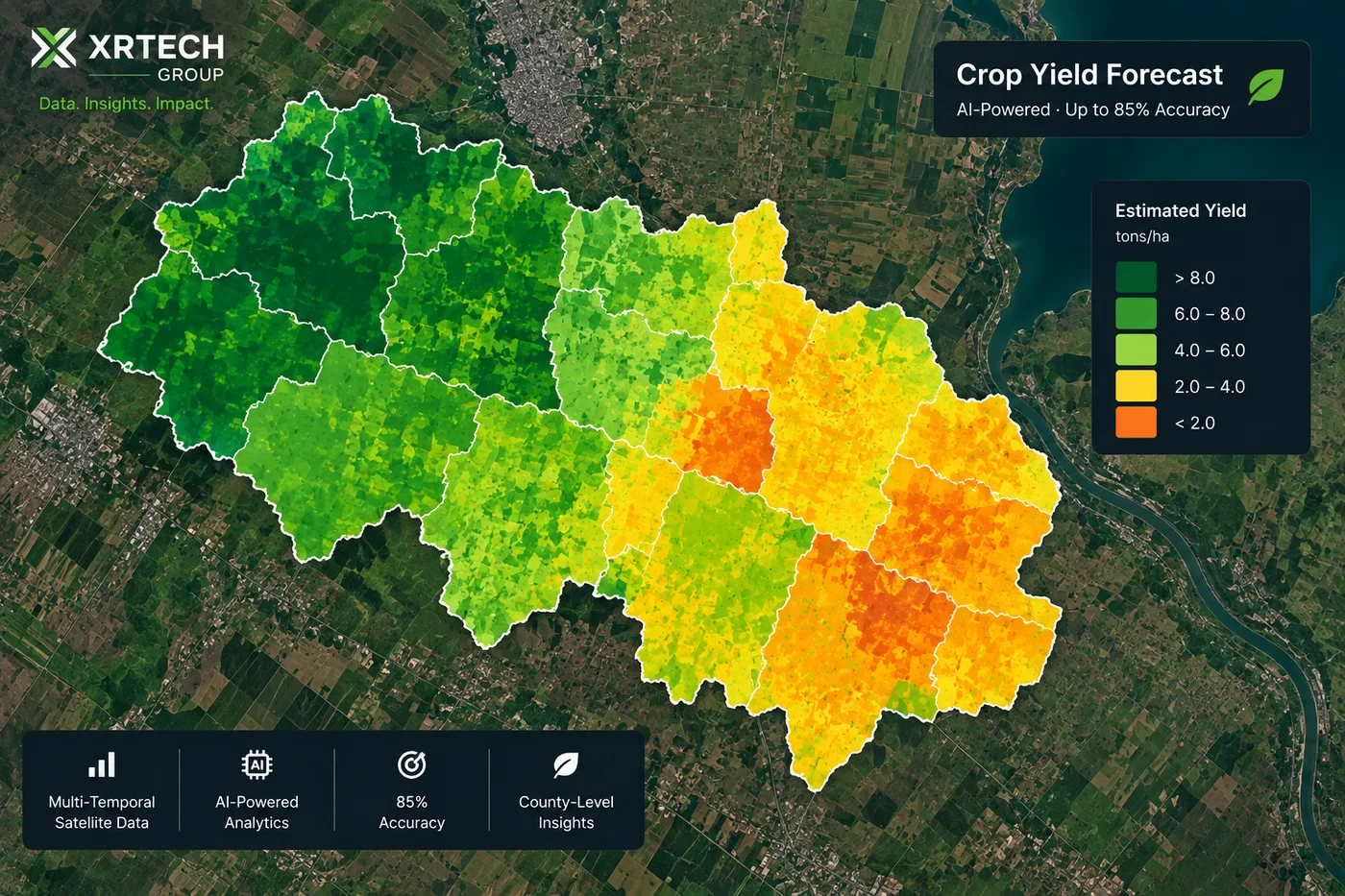
Crop diversification isn't just good agronomic advice in some regions, it's a legal requirement, and that requirement now runs on satellite data rather than paperwork or spot inspections. The EU's Common Agricultural Policy requires non-exempt holdings (farms under 10 hectares are exempt) to grow at least two to three different crops at the parcel level over a four-year period, and as of the 2026 claim year, the EU's satellite-based Area Monitoring System is fully operational across every member state, verifying compliance for roughly €43 billion a year in farm payments, about 78% of the entire CAP budget.
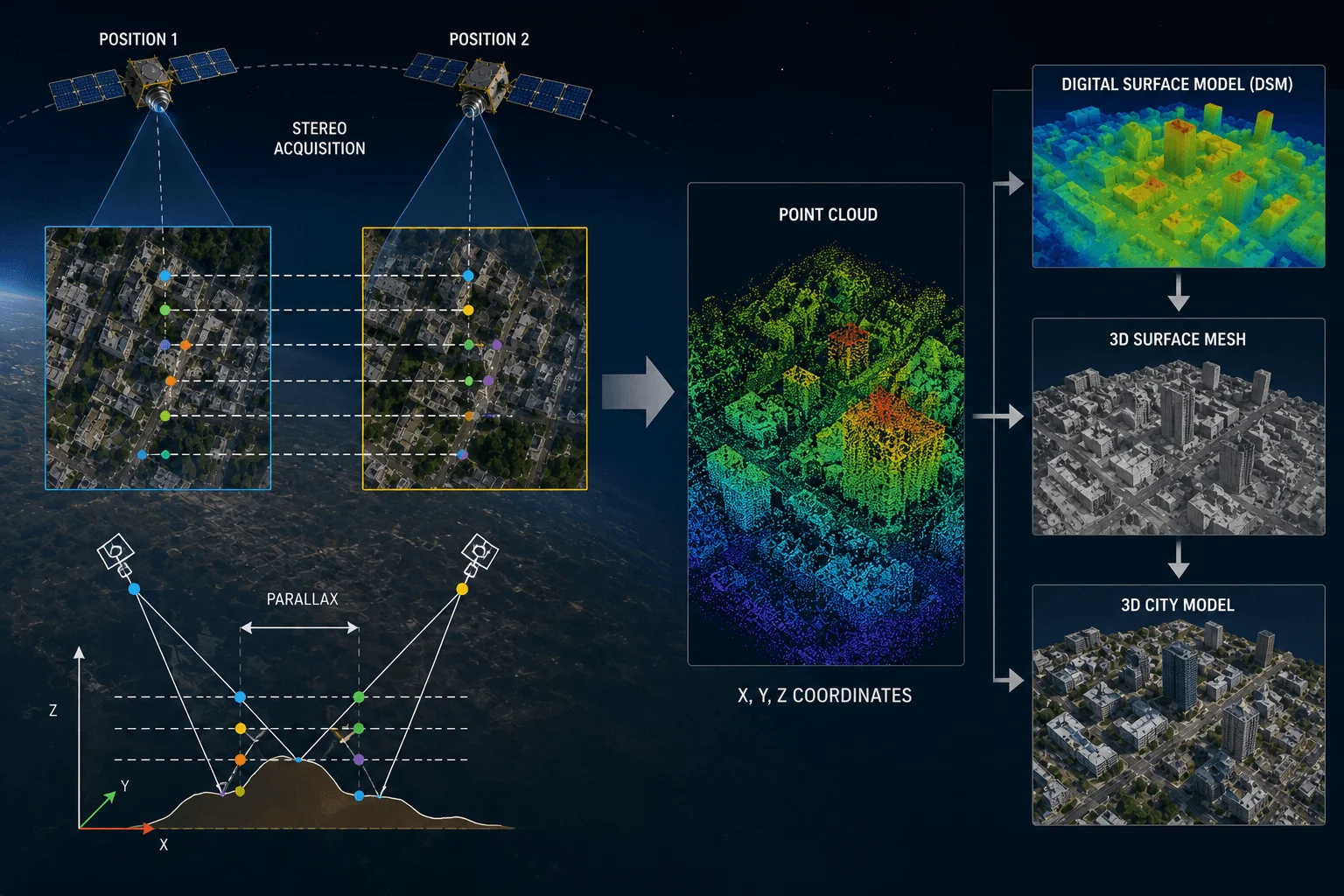
The mechanism is Sentinel-2's multispectral imagery, 12 spectral bands at 10 to 20 m resolution with a five-day revisit cycle, feeding crop-classification models that identify what's growing on a parcel and track it against the declared rotation plan over time. Research groups have gone further, encoding expected rotation sequences as probabilistic models that improve crop identification accuracy by using the previous year's crop as a predictor for the current one, the same logic an agronomist uses mentally, just automated at national scale.
For growers running satellite-based agriculture monitoring outside a regulatory context, the same imagery answers a more practical question: whether a rotation plan is actually being followed field by field, and whether the soil-health and yield benefits described above are showing up in vegetation indices season over season, not just on paper.
Key takeaways
- Crop rotation is a planned, multi-year sequence of different crops on the same field, designed so nutrient use, pests, and disease pressure differ from one planting to the next.
- Diversified rotations have been measured raising equivalent yield by up to 38%, with corn-soybean rotations specifically showing gains from about 5% up to nearly 80% depending on conditions.
- Legumes in rotation raise soil nitrogen by 20 to 40%, and rotations that include them cut nitrous oxide emissions by around 39% compared to simplified systems.
- Up to 60% of eroded soil ends up in streams and rivers; cover crops and rotation are among the most effective ways to keep that soil, and its nutrients, in the field.
- Crop diversification is a legal requirement in regions like the EU, where a satellite-based Area Monitoring System now verifies compliance for about 78% of the entire CAP payment budget.
Frequently asked questions
What is crop rotation?
Crop rotation is the practice of planting a planned sequence of different crops on the same field across seasons or years, instead of growing the same crop continuously. It's designed so each crop's nutrient demands and effect on pests, weeds, and disease differ from the one grown before it, letting the soil recover between plantings of any single crop.
What are the advantages of crop rotation?
The main advantages of crop rotation are improved soil structure, higher soil fertility and nitrogen levels, reduced soil erosion, fewer weeds, pests, and diseases, higher crop yields (diversified rotations have shown yield gains up to 38%), lower input costs, and reduced greenhouse gas emissions, since rotations with legumes can cut nitrous oxide emissions by roughly 39%.
Why is crop rotation important?
Crop rotation is important because continuously planting the same crop depletes specific soil nutrients, allows crop-specific pests and pathogens to build up in the soil, and degrades soil structure over time. Rotating crops interrupts all three problems at once, which is why it remains central to both conventional and organic farming after thousands of years of use.
How does crop rotation increase yield?
Crop rotation increases yield by improving soil structure, restoring nutrients like nitrogen through legumes, and reducing pest and disease pressure that builds up under continuous cropping. Research has measured a roughly 29% corn yield improvement in a two-year corn-soybean rotation, rising to around 48% in a four-year rotation with a legume cover crop.
How do you rotate crops?
Start by identifying crop options suited to your region's soil and climate, then plan a multi-year sequence that alternates crops with different nutrient needs, such as a nitrogen-fixing legume after a heavy nitrogen user like corn or tomatoes. Divide the field into plots or blocks, follow the planned sequence each season, and monitor soil and yield results to adjust the plan over time.
What should I plant after potatoes in a rotation?
Legumes like beans or peas work well after potatoes since they fix nitrogen and help break potato-specific disease cycles. Leafy greens such as lettuce or spinach are also a good option for a quick turnaround, and brassicas like cabbage or broccoli help control pests and diseases commonly associated with potato crops.
What is the difference between crop rotation and monocropping?
Monocropping (or continuous cropping) plants the same crop on the same field every season, which depletes specific nutrients and lets crop-specific pests and pathogens build up over time. Crop rotation alternates different crops on a planned schedule specifically to avoid those problems, generally producing higher long-term yields and lower input costs than continuous monocropping.
Are there any disadvantages to crop rotation?
When planned properly, crop rotation has few real disadvantages, though it requires more planning, equipment, and market relationships than growing a single crop. The main structural downside applies to land extremely well suited to one high-value crop in regions with mandatory crop diversification laws, such as the EU, where growers must diversify even if the soil could support a single crop indefinitely.
Can satellite imagery track crop rotation?
Yes. Satellites like Sentinel-2 classify crop types from multispectral imagery and track them against a field's planting history over multiple years. The EU's satellite-based Area Monitoring System verifies crop diversification compliance for roughly €43 billion a year in farm payments, and the same imagery lets any grower confirm a rotation plan is being followed and check whether soil and yield benefits are showing up season over season.
Sources and further reading
- Nature Communications: Diversifying crop rotation increases food production, reduces net greenhouse gas emissions and improves soil health
- Iowa State University Extension: Value of crop rotation in nitrogen management
- ESA Copernicus: Sentinel-2 multispectral mission specifications and CAP Area Monitoring Services
- European Commission: Common Agricultural Policy crop diversification rules, 2023–2027
- Peer-reviewed research on corn-soybean rotation yield effects and biological nitrogen fixation
See your rotation plan from orbit
Search our live optical, multispectral, and SAR archive or task new imagery over your fields to track crop type, vegetation health, and soil conditions season to season, and confirm your rotation plan is paying off where it matters.