Types of Soil: The Complete Guide to Soil Categories and Characteristics
On this page
- What is soil, and why do types of soil matter?
- How many types of soil are there?
- The 6 main types of soil at a glance
- The 6 types of soil, explained
- 01. Sandy soil
- 02. Clay soil
- 03. Silty soil
- 04. Loamy soil
- 05. Chalky soil
- 06. Peaty soil
- Soil classification beyond texture: the USDA's 12 soil orders
- How to identify your soil type
- How satellite imagery maps soil types without a field visit
- Improving each type of soil
- Matching crops to soil type
- Frequently asked questions
- Sources and further reading
Every growing decision, what to plant, how often to water, how much fertilizer to apply, traces back to one question: what types of soil are you actually working with? Soil types are grouped by the size of their mineral particles and their organic-matter content, and that mix controls drainage, nutrient supply, and pH more than almost anything else on a farm or in a garden. Get the soil type wrong and even a well-chosen crop struggles. Get it right, and the rest of the growing plan gets a lot easier. This guide covers the six soil categories gardeners and agronomists work with day to day, the more formal classification systems soil scientists use behind them, how to test for your own soil variety in an afternoon, and how satellite and radar sensors now map soil composition across entire farms without a single soil auger going into the ground.
Quick answer
The main types of soil are sand, clay, silt, loam, chalk, and peat, classified by particle size, mineral content, and organic matter. Soil scientists also use finer systems: the USDA's 12-class soil texture triangle for particle-size ratios, and the 12 USDA soil orders, such as Mollisols and Oxisols, for formal soil taxonomy. Each type is identified by its drainage rate, water-holding capacity, nutrient content, and pH, and together those traits determine what grows best in it.
What is soil, and why do types of soil matter?
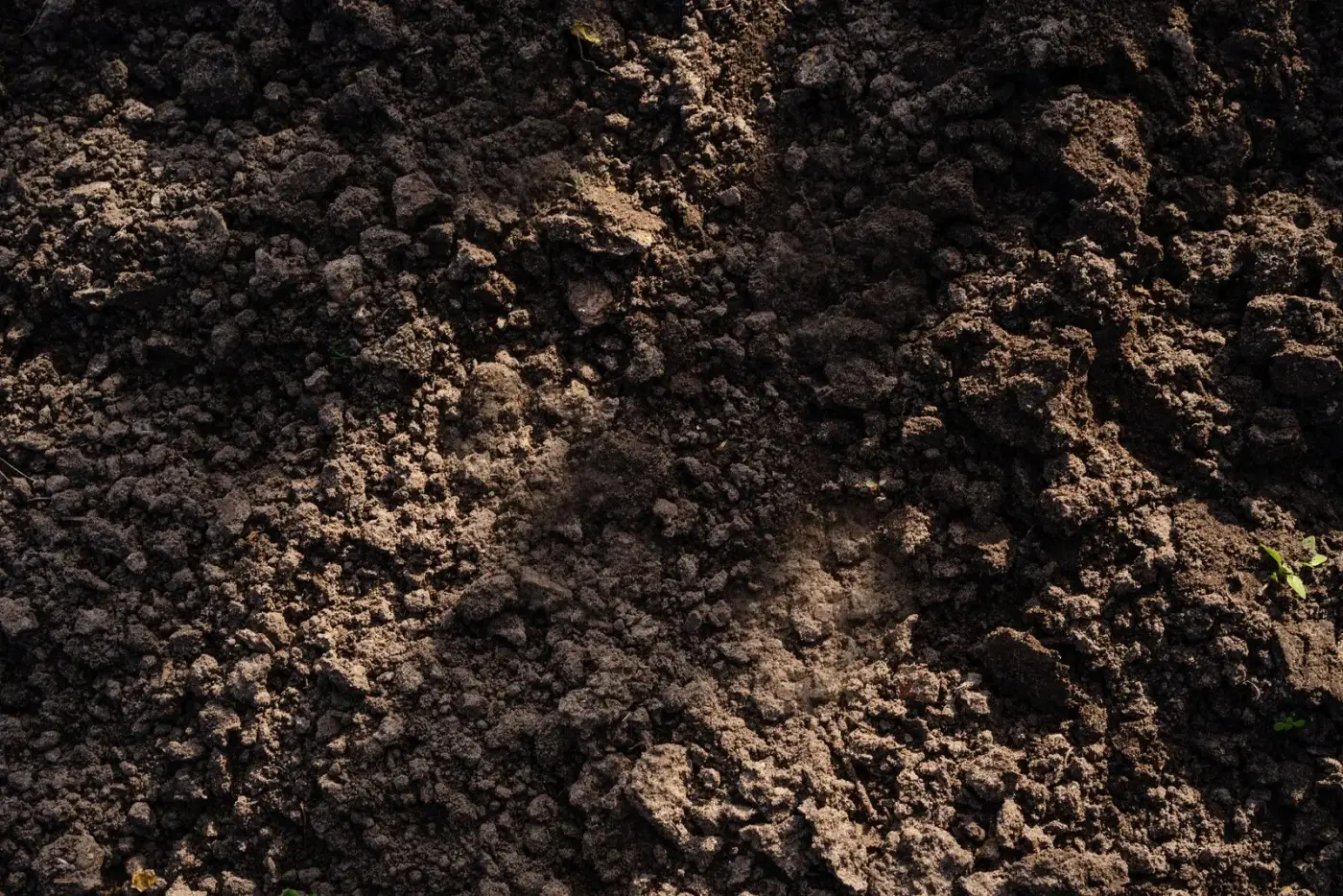
Soil is the loose layer of mineral particles, organic matter, water, air, and living organisms that covers most of the Earth's land surface. It forms over centuries as rock weathers into mineral fragments and organic material from decomposing plants and animals mixes in, and it is what anchors roots, stores water, and cycles nutrients between the atmosphere, the plant, and the ground.
A cross-section of soil, called a soil profile, usually shows distinct horizons: a thin surface layer of fresh and partly decomposed leaf litter (the O horizon), a dark, organic-rich topsoil (the A horizon), a mineral-heavy subsoil (the B horizon), and, further down, weathered parent rock (the C horizon). Most of a soil's biological and chemical activity happens in that O-A-B stack near the surface. The exact texture and depth of those horizons are what separate one soil type from another, and that texture is set almost entirely by the ratio of three mineral particle sizes: sand, silt, and clay.
How many types of soil are there?
The honest answer depends on which classification you're using, and this is where a lot of guides give an inconsistent answer. Three primary particle sizes, sand, silt, and clay, combine in different ratios to produce the USDA's 12 official texture classes on the soil texture triangle. For everyday gardening and farming, most of that detail collapses into six broadly recognized soil categories: sand, clay, silt, loam, chalk, and peat, the last two defined more by mineral and organic content than by particle size alone. Some references simplify further to four primary types, sand, clay, silt, and loam, since those four are defined directly by the sand-silt-clay ratio, while chalk and peat are shaped more by calcium carbonate content and organic matter respectively; six is the more complete list once those two are counted in. Formal soil science goes further still, using the USDA's 12 soil orders (Mollisols, Oxisols, Vertisols, and so on) to classify soil globally by how it formed, not just what it's made of. When someone asks what are the types of soil, the six-category answer is almost always what they need; the texture triangle and the 12 orders matter more for soil surveys, land-use planning, and research.
The 6 main types of soil at a glance
Soil composition can be sand, clay, silt, loam, chalk, or peat-based, and real-world fields rarely sit purely in one category; most soil systems shift across a farm, with patches where one component dominates more than another. The table below compares all six soil varieties side by side on the traits that actually decide what will grow.
| Soil type | Particle size | Drainage | Water retention | Nutrient level | Typical pH | Best suited for |
|---|---|---|---|---|---|---|
| Sand | 0.05–2 mm | Fast, excellent | Low | Low | 5.5–6.5, acidic | Root vegetables, Mediterranean herbs, drought-tolerant trees |
| Clay | <0.002 mm | Slow, poor | High | High | 6.0–8.0, variable | Brassicas, fruit trees, paddy crops, when blended with loam |
| Silt | 0.002–0.05 mm | Moderate | Very high | Moderate–high | 6.0–7.0, near neutral | Most vegetables, perennials, moisture-loving shrubs |
| Loam | Balanced mix | Good | Moderate–high | High | 6.0–7.0, near neutral | Nearly all crops, orchard fruit, row crops |
| Chalk | Variable, stony | Fast, excellent | Low | Low, often iron-deficient | 7.5–8.5, alkaline | Lilac, spinach, sweet corn, cabbage, alkaline-tolerant shrubs |
| Peat | Organic, not mineral | Slow, poor | Very high | High but often locked up | 3.5–5.5, acidic | Blueberries, cranberries, azaleas, rhododendrons |
The 6 types of soil, explained
Each soil variety behaves the way it does because of how its particles pack together, how much organic matter it holds, and what that combination does to water and nutrients moving through it.
01. Sandy soil
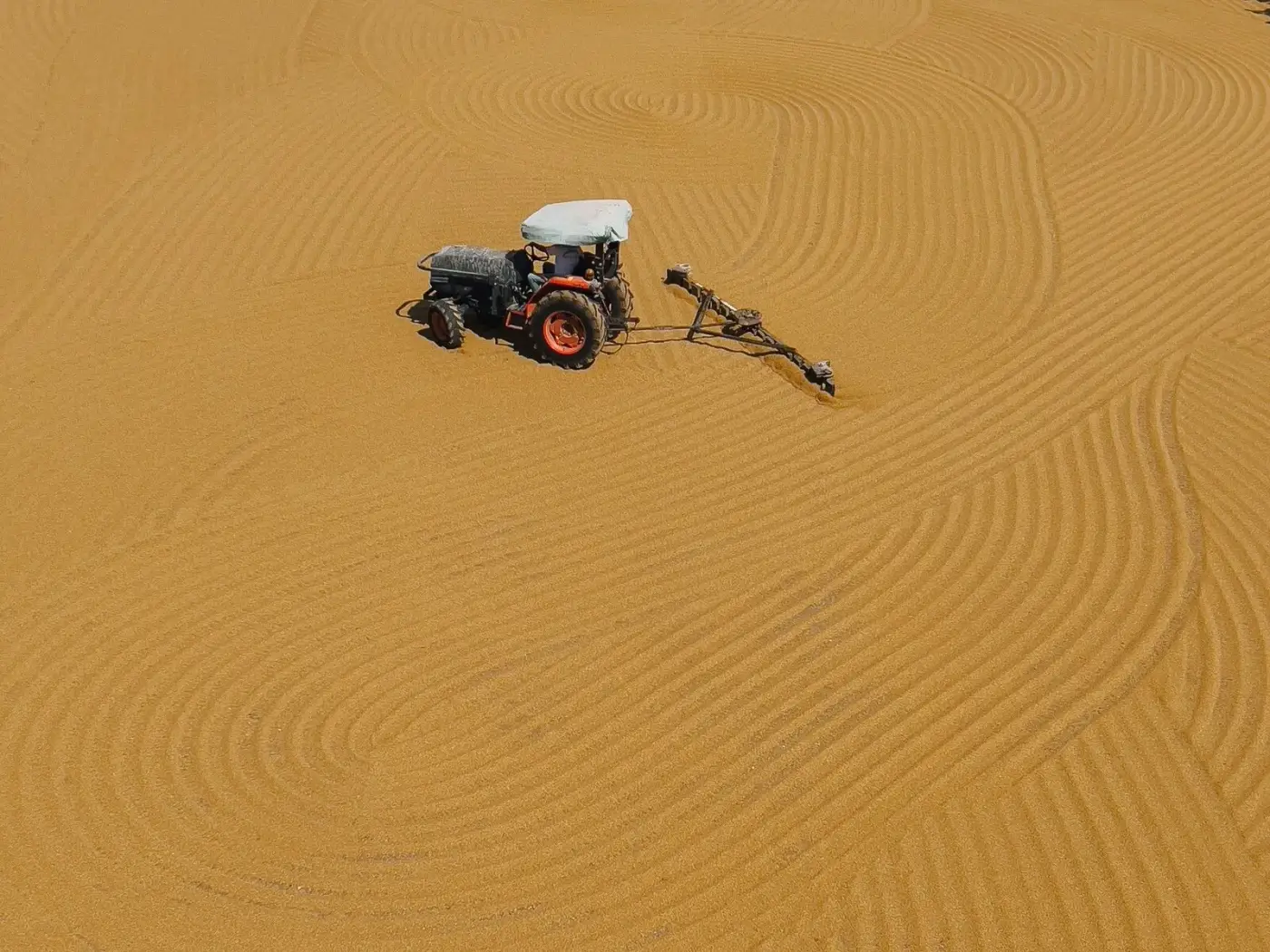
Sandy soil is built from coarse mineral grains, the largest particle size of the three, which leaves wide gaps between particles for water and air to move through freely. That gives it excellent drainage and easy workability: it's soft, light, and simple to dig, but the same large pore spaces let nutrients leach out with the water almost as fast as they're applied. Sandy soils warm up quickly in spring and dry out just as quickly in summer, and they tend to run slightly acidic, which is exactly what Mediterranean herbs like rosemary, thyme, and oregano prefer, along with trees such as fig, olive, and bay laurel. The loose texture is also why root vegetables, carrots, beets, parsnips, radishes, turnips, expand without resistance and come out of the ground clean.
Advantages: warms up quickly in spring, easy to dig and work, drains fast enough to avoid waterlogging.
Disadvantages: dries out fast in summer, nutrients and water leach away quickly (especially after heavy rain), often acidic.
02. Clay soil
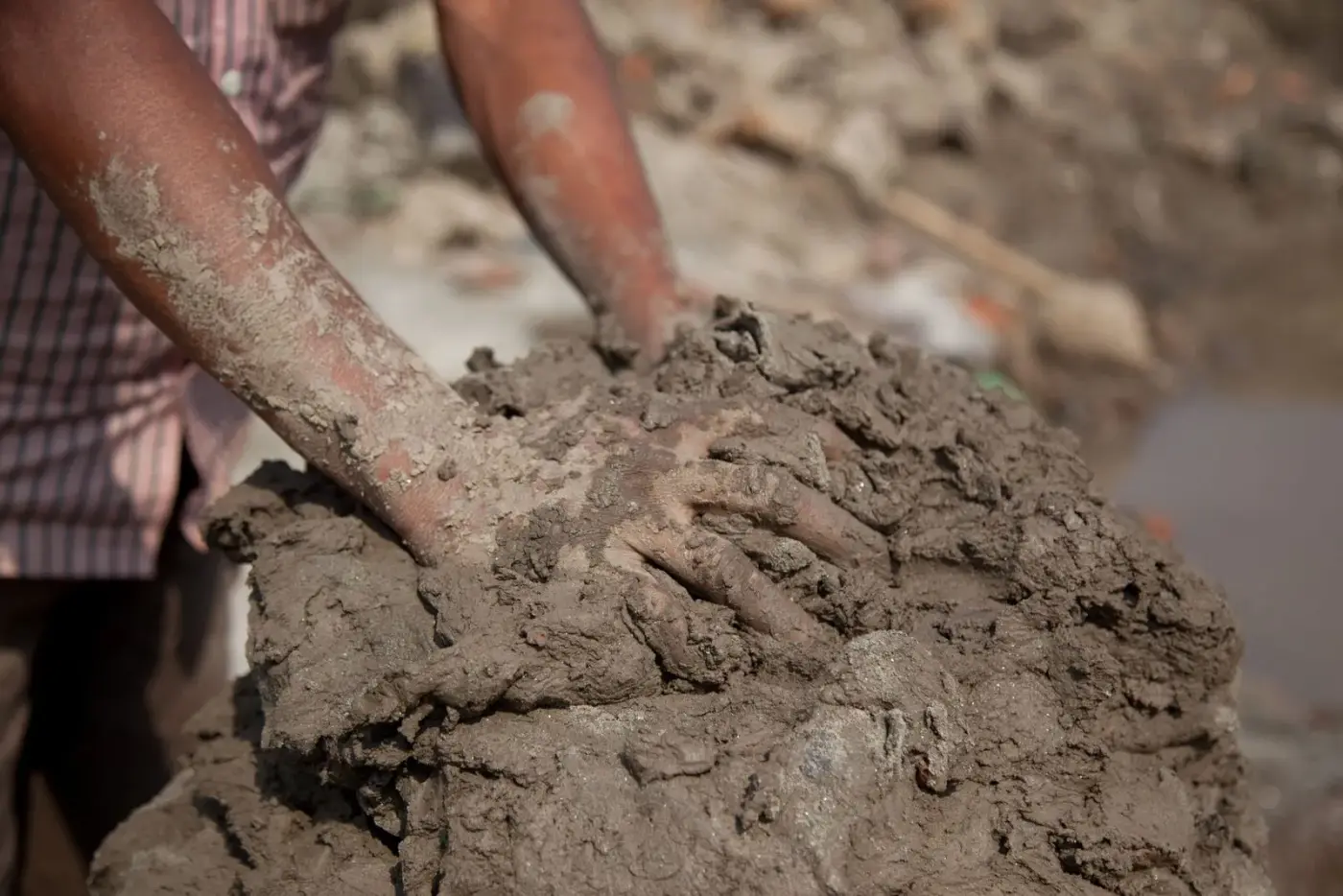
Clay is the near-opposite of sand. Its particles are so fine, under 0.002 mm, that they pack together with almost no air space left between them, so water struggles to drain and the soil compacts easily under foot or machine traffic. That poor drainage is clay's main drawback for growing, but the same fine particle structure gives it a large surface area for holding onto nutrients and minerals, which is why clay-heavy ground is often the most fertile soil on a farm once drainage is addressed. Brassicas and many fruiting trees tolerate clay reasonably well, and most crops do best when clay is blended with organic matter or loam rather than left as pure clay, trading a bit of that nutrient density for workable structure.
Advantages: holds onto nutrients with little leaching, retains moisture well through dry spells.
Disadvantages: drains slowly and stays wet, slow to warm in spring, compacts easily and can crack when it dries out.
03. Silty soil
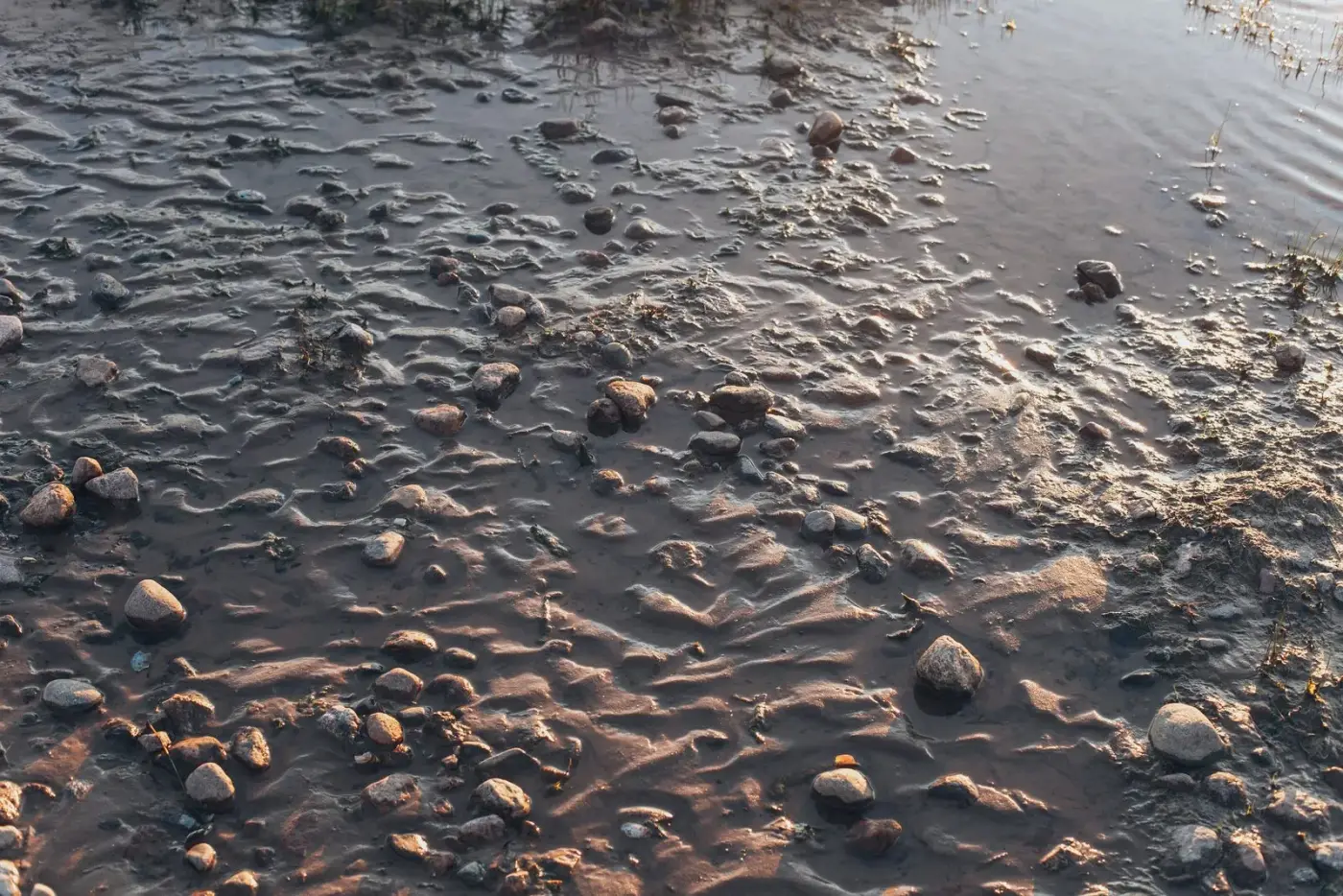
Silty soil sits between sand and clay in particle size, and it feels soft, smooth, and almost floury between your fingers. That mid-range particle size gives silt the best water-holding capacity of the six soil types, alongside solid natural fertility, which is why silt is generally easy to grow in without heavy amendment. Its one structural weakness is that silt lacks the coarse particles that hold a soil's shape, so it can compact and crust over without help. Perennial shrubs and trees with dense root systems, along with cover crops, help bind silty ground together over a season or two and build the structure it's missing on its own.
Advantages: more fertile than sand, better water-holding capacity than sandy soil, easier to work than clay.
Disadvantages: prone to surface crusting, can compact without added structure, water infiltration slows once crusted.
04. Loamy soil
Loamy soil is a balanced blend of sand, silt, and clay, and it's the type most agronomists point to when asked which soil is best for farming. It inherits sand's drainage, silt's fertility, and clay's nutrient-holding capacity without carrying any one texture's downside to an extreme, and it warms and cools gradually, keeping root temperature more stable through the season than a straight sandy or clay soil would. Nearly every fruit and vegetable performs well in loam, but because it's a delicate three-way balance, continuous heavy feeding from one crop can tip that balance over time. Crop rotation is the standard fix, since it stops a single heavy feeder from stripping the same nutrients season after season.
Advantages: balanced drainage and water retention, nutrient-dense and biologically active, warms faster than clay in spring.
Disadvantages: can contain stones depending on the parent material, still needs regular organic matter to stay in balance.
05. Chalky soil
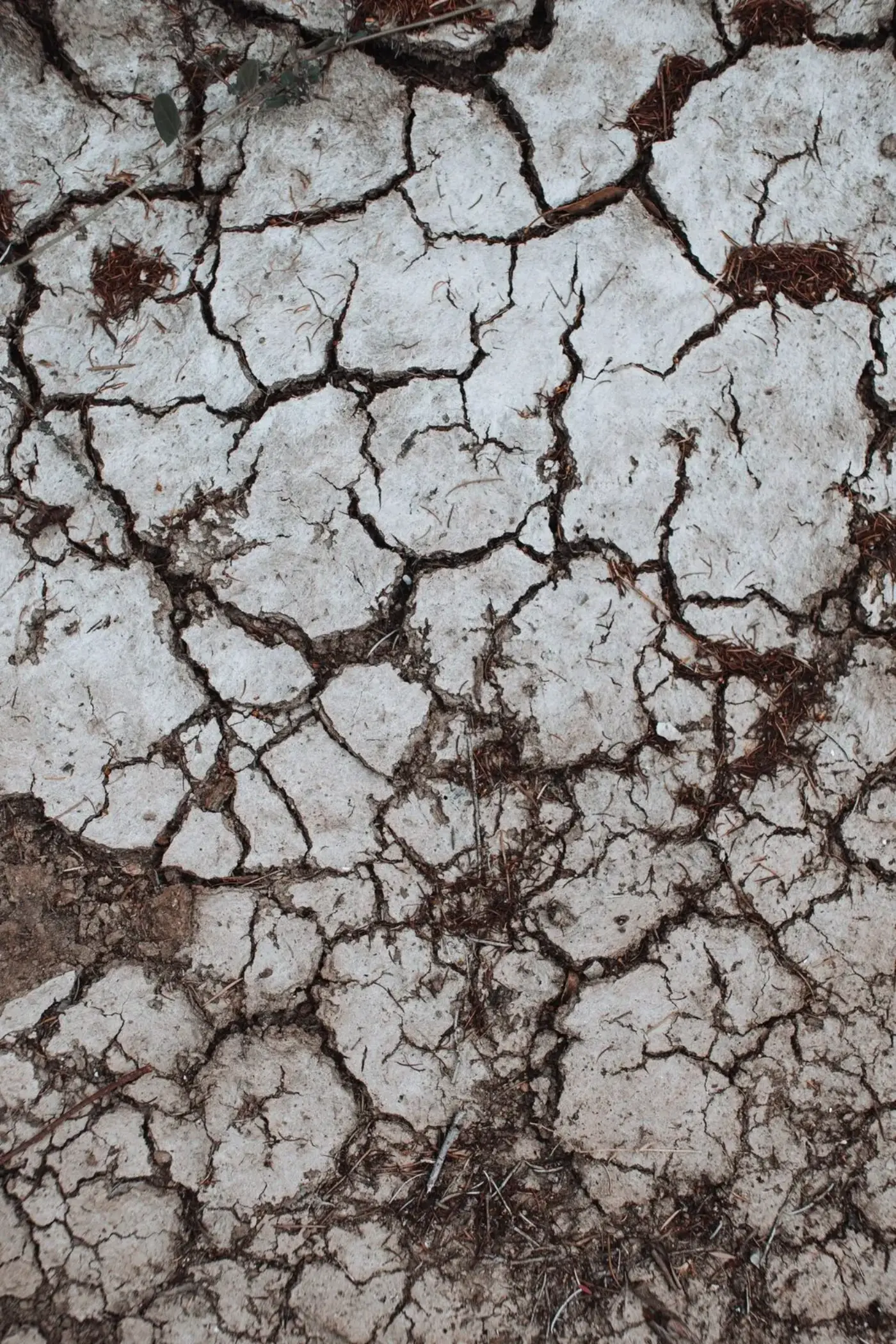
Chalky, or lime-rich, soil sits on top of chalk or limestone bedrock and carries a high concentration of calcium carbonate, which pushes its pH firmly alkaline, usually 7.5 to 8.5. That alkalinity locks up iron and manganese, which is why plants that need acidic conditions often show yellowing (chlorosis) in chalky ground even when nutrients are technically present in the soil. The upside is drainage: the larger stone and rock content common in chalky soil lets water move through quickly, though the same rocks can physically block root vegetables from expanding. Working in organic matter and, where needed, a sulfur-based amendment gradually lowers the pH and builds nutrient reserves for a wider range of crops.
Advantages: fast, reliable drainage that rarely waterlogs.
Disadvantages: low natural fertility, alkaline pH locks up iron and manganese, can be stony and drought-prone in summer.
06. Peaty soil
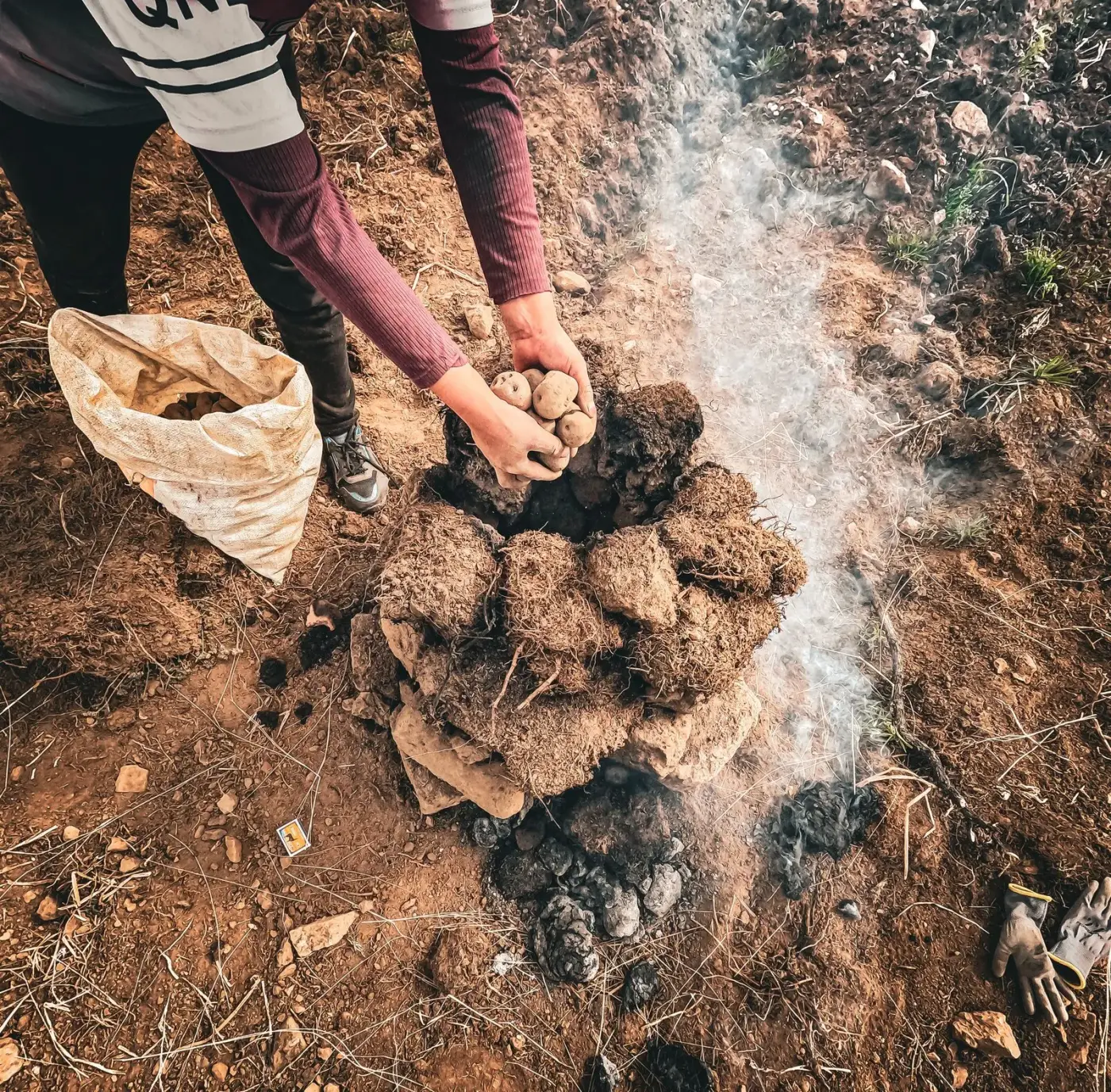
Peaty soil is defined by its organic content rather than mineral particle size: it forms where decomposition is slow, usually in wet, low-oxygen conditions, so partly decayed plant matter builds up faster than it breaks down. That gives peat a dark, almost black color, a light, springy texture that soaks up water like a sponge, and the highest water-holding capacity of any soil type here. The tradeoff is acidity, peat typically runs 3.5 to 5.5 pH, and drainage, which stays poor unless it's amended. Blueberries, cranberries, azaleas, and rhododendrons thrive in peat's natural acidity without any adjustment, while most other crops need lime worked in to bring the pH up to a workable range first.
Advantages: exceptional moisture retention, naturally suited to acid-loving plants with no amendment needed.
Disadvantages: poor drainage, strongly acidic for most general crops, often needs drainage work before wider planting.
Soil classification beyond texture: the USDA's 12 soil orders
The six categories above describe soil the way a grower or gardener experiences it, texture, drainage, workability. Soil scientists classify soil differently, by how it formed and what diagnostic horizons it developed, using the USDA's Keys to Soil Taxonomy. That system groups every soil on Earth into 12 orders, and it's worth knowing at least the outline, since it explains why the same "loam" label can behave very differently in Iowa versus Indonesia.
| Order | Defining feature | Typically found |
|---|---|---|
| Mollisols | Dark, humus-rich, base-saturated surface layer; the world's most agriculturally productive order | US Midwest, Ukrainian and Russian steppes, Argentine Pampas |
| Alfisols | Moderately weathered with a clay-enriched subsoil and decent natural fertility | Temperate forests, US Midwest and Europe |
| Vertisols | High-shrink-swell clay that cracks deeply when dry and self-mixes ("self-mulching") | India's black cotton soil belt, parts of Texas and Australia |
| Ultisols | Highly weathered, acidic, clay-rich subsoil, low natural fertility without inputs | Humid subtropics: southeastern US, southeast Asia |
| Oxisols | Extremely weathered, iron- and aluminum-oxide rich, very low natural fertility | Tropical rainforests: Amazon basin, Central Africa, southeast Asia |
| Aridisols | Low organic matter, often saline or calcareous, forms under sustained water deficit | Deserts worldwide |
| Entisols | Little to no horizon development; young or constantly disturbed soil | Floodplains, dunes, recent erosion sites, globally |
| Inceptisols | Weak horizon development, further along than Entisols but still young | Humid climates on young landscapes, worldwide |
| Andisols | Formed from volcanic ash; unusually high water-holding capacity once weathered | Pacific Rim, Japan, Indonesia, Pacific Northwest US |
| Spodosols | Acidic and sandy, with an iron- and aluminum-humus layer (spodic horizon) | Coniferous forests in cool, humid climates: New England, Scandinavia |
| Gelisols | Permafrost within 2 m of the surface | Arctic and high-altitude regions |
| Histosols | Mostly organic material, over 20% organic carbon; the formal classification for peat | Bogs, fens, and wetlands worldwide |
Mollisols cover only about 7% of the world's ice-free land, yet they underpin a hugely disproportionate share of global grain production, which is a large part of why soil type, not just soil texture, matters so much to food security and land valuation. Outside the US, the international World Reference Base for Soil Resources (WRB) classifies soil on similar principles with different naming, so a soil survey from Europe or Africa may use different terms for a soil that behaves almost identically to a familiar USDA order.
How to identify your soil type
Since the six agricultural soil categories are distinguished mainly by particle size, you can narrow down your soil variety in about a day with two simple field tests, no lab required.
The squeeze test
Grab a moist handful and squeeze it for a few seconds, then release. Clay holds its shape and even ribbons out over 5 cm between your fingers. Sand crumbles apart instantly. Loam and silt hold a loose shape briefly before falling apart. Peat springs back slightly, sponge-like, and often releases moisture.
The jar settling test
Fill a clear jar about a third with soil, top with water, shake, and let it stand 24 hours. Sand settles within minutes as a thick bottom layer with clear water above. Silt and clay stay cloudy far longer, with clay leaving the thinnest, densest layer. Peat's organic fragments float instead of sinking.
A pH and nutrient kit
Field tests narrow down texture, but only a soil test kit or lab analysis gives an exact pH and nutrient reading. That combination is what turns "probably loam" into an actual amendment plan, and it's the step most guides skip.
| Soil type | Squeeze test result | Jar test after 24 hours |
|---|---|---|
| Sand | Falls apart instantly, feels gritty | Settles in minutes, clear water, thick bottom layer |
| Clay | Holds shape, ribbons over 5 cm, feels sticky wet | Stays cloudy for days, thin dense bottom layer |
| Silt | Holds shape briefly, feels smooth and silky | Settles in a few hours, water slightly cloudy |
| Loam | Holds a loose shape, slightly gritty and smooth | Distinct sand, silt, and clay layers, mostly clear water |
| Chalk | Won't hold shape, gritty with visible white fragments | Water tinged grey, white or grey sediment at the bottom |
| Peat | Springy, holds moisture, rebounds like a sponge | Organic matter floats, only a fine mineral layer sinks |
How satellite imagery maps soil types without a field visit
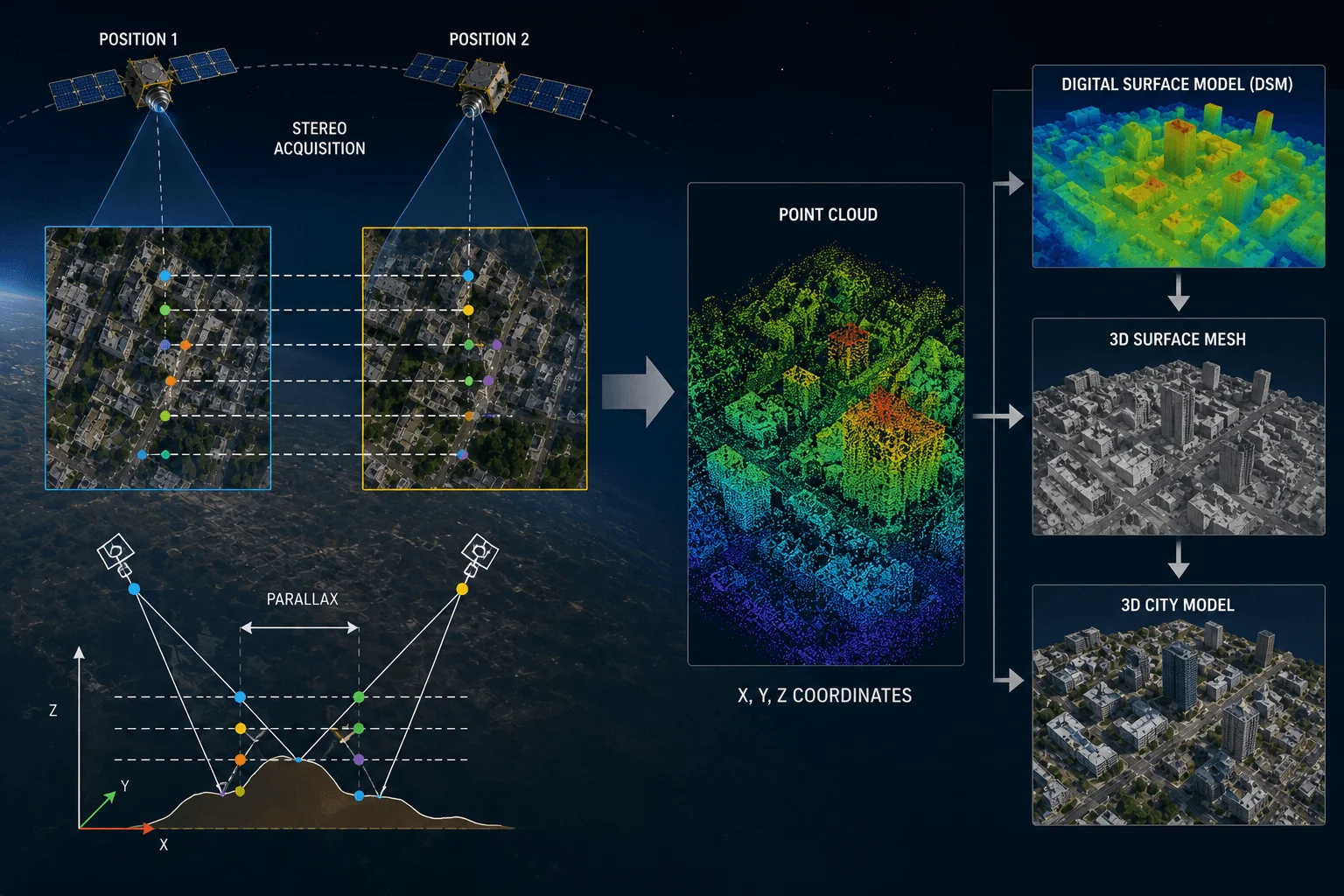
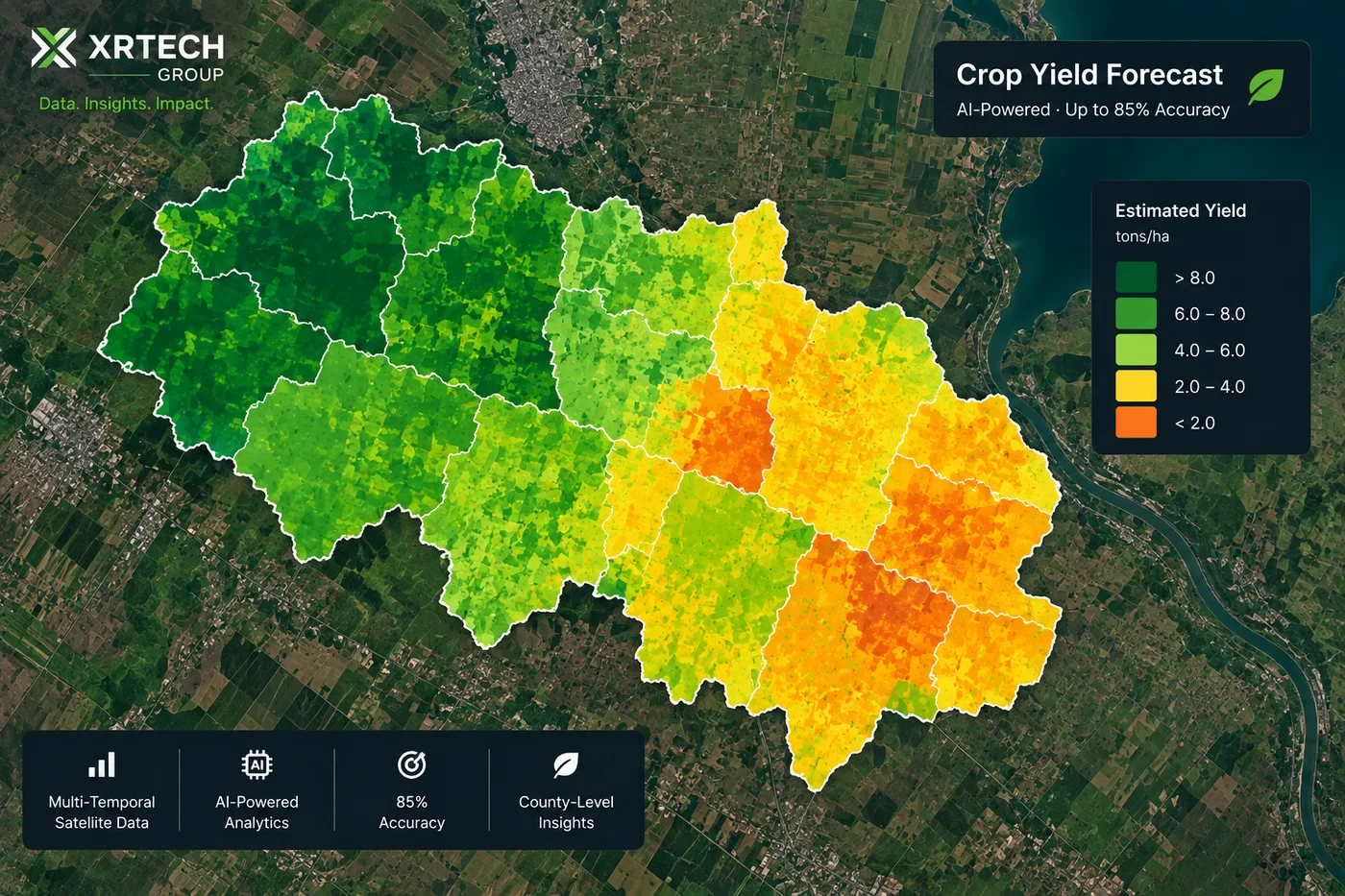
Field tests and lab kits still give the most precise reading for a single spot, but they don't scale to a 2,000-hectare farm or a regional land survey. That's the gap digital soil mapping closes. Optical satellites such as Sentinel-2 capture visible and near-infrared reflectance at 10 to 20 m resolution over bare or lightly vegetated fields, and that spectral signature correlates closely with surface soil organic carbon, clay content, and moisture. Recent research combining high-spectral-resolution imagery with machine learning has produced bare-soil composition maps at roughly 10 m resolution with better than 90% classification accuracy, a level of detail that simply was not practical from orbit a few years ago.
Radar fills the gap optical sensors can't close: Synthetic Aperture Radar (SAR) satellites like Sentinel-1 transmit their own microwave pulses, so they read surface soil moisture and roughness through cloud cover, rain, or full darkness, on a near-daily basis in many regions. Very-high-resolution commercial optical constellations add a finer layer on top of that baseline, resolving individual field zones sharply enough to draw management-zone boundaries within a single farm rather than across a whole region. Older global efforts like SoilGrids relied on static covariates and legacy survey data to interpolate soil properties; newer approaches process live Sentinel-2 imagery in cloud environments like Google Earth Engine for continuously updated, higher-resolution soil-property layers instead of a fixed historical snapshot.
None of this replaces an auger and a lab test for a final planting decision on a specific plot. What it does is tell you, before you drive out, which corners of a large property are worth sampling first, and it turns a one-time soil survey into a record you can re-check every season as tillage, erosion, and amendments shift the picture.
Improving each type of soil
No soil type locks you out of growing what you want permanently; amendments and management practices shift each one toward the middle over a season or several. A few practices apply across nearly every soil variety, and a few are specific to one extreme or the other.
| Soil type | Main issue | Common fix |
|---|---|---|
| Sand | Drains too fast, low nutrients | Organic matter (compost, well-rotted manure) to improve moisture and nutrient retention |
| Clay | Compacts, drains too slowly | Organic matter to aerate and loosen structure; avoid working when wet |
| Silt | Compacts and crusts without structure | Cover crops and perennial roots to build lasting soil structure |
| Chalk | Alkaline pH locks up iron and manganese | Organic matter over time, plus sulfur-based amendments to lower pH |
| Peat | Too acidic, poor drainage | Lime to raise pH; blend with mineral soil to improve drainage |
A couple of habits are worth calling out by type rather than folding into a table. Sandy soil responds better to frequent, light irrigation than to occasional heavy watering, since a large watering pass mostly runs straight through and off before roots can use it. Clay soil compacts under foot or machine traffic the moment it's wet, so working it only when it's dry, and aerating clay-heavy turf each fall, does more for long-term structure than any single amendment ever will.
Beyond the type-specific fixes, a few habits benefit almost any soil: mulching (straw, wood chips, or a living mulch like clover) to cool the surface, hold moisture, and suppress weeds; planting a winter cover crop such as clover, alfalfa, or another legume so bare soil isn't left exposed to wind and rain erosion between seasons; and minimizing tillage, since repeated disturbance breaks down the mycorrhizal networks and beneficial bacteria that keep any soil type biologically active over the long run. Compost teas and microbial inoculants have also become a common addition alongside these traditional amendments, aimed at rebuilding the biological activity that heavy tillage and synthetic inputs strip out of soil over time, regardless of its underlying texture. For the full range of structural and biological techniques, from terracing to buffer strips, see our guide to soil conservation methods.
Matching crops to soil type
| Soil type | Crops and plants that do well |
|---|---|
| Sand | Carrots, radishes, parsnips, strawberries, tomatoes, rosemary, thyme, lavender, fig, olive, tulips |
| Clay | Cabbage, broccoli, kale, aster, flowering quince, fruit trees blended with loam, paddy rice |
| Silt | Onions, lettuce, most leafy vegetables, willow, birch, cypress, New Zealand flax |
| Loam | Tomatoes, sweet corn, wheat, soybeans, cucumbers, strawberries, blueberries, delphinium, nearly all orchard fruit |
| Chalk | Lilac, viburnum, mock orange, spinach, beets, sweet corn, cabbage |
| Peat | Blueberries, cranberries, azaleas, rhododendrons, camellias, legumes, potatoes |
Key takeaways
- Six soil categories, sand, clay, silt, loam, chalk, and peat, cover most everyday use, but formal soil science splits soil further into 12 texture classes and 12 USDA soil orders.
- Loam is the benchmark soil for most crops because it balances drainage, water retention, and nutrient availability better than any single texture can on its own.
- Clay particles measure under 0.002 mm and hold the most nutrients but drain the slowest; sand particles run up to 2 mm and drain fastest but hold the fewest nutrients.
- Peat and chalk sit at opposite pH extremes, roughly 3.5 to 5.5 for peat and 7.5 to 8.5 for chalk, so both usually need amendment before planting most crops.
- Satellite optical and radar sensors, including Sentinel-2 and SAR, now map bare-soil composition and moisture at over 90% accuracy in research trials, without a field visit.
Frequently asked questions
What are the types of soil?
The six main types of soil recognized in agriculture and gardening are sand, clay, silt, loam, chalk, and peat, classified by particle size, drainage, and organic content. Soil science further divides soil into 12 texture classes on the USDA soil texture triangle and 12 formal USDA soil orders, such as Mollisols and Oxisols, based on how the soil formed.
How many types of soil are there?
It depends on the classification system. Gardeners and farmers typically work with six soil categories: sand, clay, silt, loam, chalk, and peat. The USDA's soil texture triangle defines 12 texture classes based on sand, silt, and clay percentages, and formal soil taxonomy groups all soil worldwide into 12 soil orders.
What are the 4 main types of soil?
Some references group soil into four primary types, sand, clay, silt, and loam, since those four are defined directly by the ratio of the three mineral particle sizes. Chalk and peat are shaped more by calcium carbonate content and organic matter respectively, which is why they're sometimes left out of the four-type framing but included in the more complete six-type list used across agriculture and gardening.
What is the best type of soil for farming or gardening?
Loam is generally the best type of soil for farming and gardening because it balances the drainage of sand, the fertility of silt, and the nutrient-holding capacity of clay without carrying any single texture's drawback to an extreme. It supports the widest range of crops with the least amendment.
What type of soil holds the most water?
Peat holds the most water of the common soil types due to its high organic content and spongy structure, though it drains poorly as a result. Among mineral soils, silt has the highest water-holding capacity, since its mid-sized particles create pore spaces fine enough to retain moisture but not so fine that drainage stops entirely.
Is sand a type of soil?
Sand is a mineral particle type, ranging from 0.05 to 2 mm, that becomes sandy soil when combined with organic matter, air, and water in the proportions typical of that texture class. On its own, sand is a soil component rather than a complete soil; true soil always includes organic matter and biological activity.
What is the difference between soil type and soil texture?
Soil texture refers specifically to the ratio of sand, silt, and clay particles in a sample, plotted on the USDA texture triangle into one of 12 classes. Soil type is a broader, more practical grouping, such as sand, clay, loam, chalk, or peat, that also factors in organic content, pH, and drainage behavior, not just particle-size ratios.
Can satellite imagery identify soil type?
Yes. Optical satellites such as Sentinel-2 read spectral reflectance over bare or sparsely vegetated fields to estimate soil organic carbon, clay content, and moisture, and recent machine-learning models have reached over 90% accuracy mapping bare-soil composition at roughly 10 m resolution. Radar satellites add all-weather soil-moisture readings on top of that baseline.
What is loam soil made of?
Loam is a roughly balanced mixture of sand, silt, and clay, commonly cited as close to 40% sand, 40% silt, and 20% clay, though exact ratios vary by loam subtype (sandy loam, silty loam, clay loam). That balance is what gives loam good drainage, water retention, and nutrient availability all at once.
Why is chalky soil alkaline?
Chalky soil forms over chalk or limestone bedrock, which is rich in calcium carbonate. That mineral raises soil pH into the alkaline range, typically 7.5 to 8.5, and can lock up iron and manganese, causing yellowing (chlorosis) in plants that need more acidic conditions even when those nutrients are present in the soil.
What soil order covers the most farmland globally?
Mollisols, the dark, humus-rich soil order found in regions like the US Midwest, the Ukrainian and Russian steppes, and the Argentine Pampas, cover only about 7% of the world's ice-free land but are considered the most agriculturally productive soil order due to their naturally high organic matter and base saturation.
How do I find out what type of soil I have?
Start with a squeeze test (how well a moist handful holds its shape) and a jar settling test (how particles layer in water over 24 hours) to narrow down the texture. For an exact pH and nutrient profile, follow up with a soil test kit or a lab analysis, since field tests alone can identify texture but not chemistry.
Sources and further reading
- USDA NRCS: Keys to Soil Taxonomy and the 12 soil orders
- USDA NRCS: Soil texture triangle and particle-size classification
- ESA Copernicus: Sentinel-1 (SAR) and Sentinel-2 (multispectral) mission specifications
- Peer-reviewed digital soil mapping research combining Sentinel-2 and machine learning for bare-soil composition
- FAO: World Reference Base for Soil Resources, international soil classification
See soil and field conditions from orbit
Search our live satellite archive or task new optical, multispectral, or SAR imagery over your fields to track soil moisture, bare-soil composition, and crop conditions season to season.